
Unit 1 Test Review
Authored by Chelsi Gage
Biology
9th Grade
NGSS covered
Used 1K+ times


AI Actions
Add similar questions
Adjust reading levels
Convert to real-world scenario
Translate activity
More...
About
This quiz covers biomolecules and cell structure, making it ideal for 9th grade biology students learning fundamental concepts in biochemistry and cell biology. The content assessment requires students to identify the four major biomolecules (carbohydrates, lipids, proteins, and nucleic acids) and understand their distinct functions, chemical compositions, and real-world examples. Students must recognize that carbohydrates serve as quick energy sources and are found in foods like pasta and bread, while lipids provide long-term energy storage and insulation. They need to understand that proteins function as enzymes, structural components, and muscle builders, while nucleic acids store genetic information. The quiz also tests knowledge of cell organelles and their functions, including the nucleus as the control center, mitochondria as powerhouses, chloroplasts for photosynthesis, and ribosomes for protein synthesis. Students must differentiate between prokaryotic and eukaryotic cells and identify unique features of plant versus animal cells, such as cell walls and central vacuoles in plants. Created by Chelsi Gage, a Biology teacher in the US who teaches grade 9. This comprehensive review quiz serves multiple instructional purposes and works exceptionally well as a pre-test assessment tool to gauge student readiness before a unit exam. Teachers can deploy this as a warm-up activity at the beginning of class to activate prior knowledge, assign it as homework to reinforce key concepts, or use it during review sessions to identify areas needing additional instruction. The visual components with labeled diagrams make it particularly effective for formative assessment, allowing teachers to quickly identify which students struggle with organelle identification or biomolecule classification. This assessment aligns with Next Generation Science Standards HS-LS1-1 (construct models of molecular structures) and supports Common Core literacy standards by requiring students to analyze scientific diagrams and apply vocabulary in context.
Content View
Student View
37 questions
Show all answers
1.
MULTIPLE CHOICE QUESTION
1 min • 1 pt
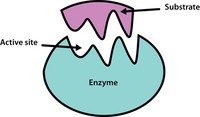
What biomolecule do enzymes belong to?
Tags
NGSS.MS-LS1-7
2.
MULTIPLE CHOICE QUESTION
1 min • 1 pt
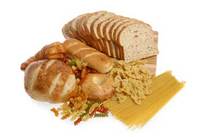
Which biomolecule is found in pasta and bread?
Tags
NGSS.HS-LS1-6
3.
MULTIPLE CHOICE QUESTION
1 min • 1 pt

Which biomolecule is a main source of quick energy?
4.
MULTIPLE CHOICE QUESTION
1 min • 1 pt
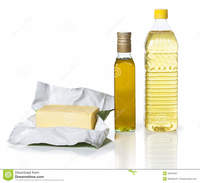
Which biomolecule is found in fats, oils, and waxes and is a source of long-term energy?
5.
MULTIPLE CHOICE QUESTION
1 min • 1 pt

What is the function of a nucleic acid?
Tags
NGSS.HS-LS1-1
6.
MULTIPLE CHOICE QUESTION
1 min • 1 pt

Carbon, Hydrogen, Oxygen and Nitrogen are elements in what biomolecule?
Tags
NGSS.HS-LS1-6
7.
MULTIPLE CHOICE QUESTION
5 mins • 1 pt
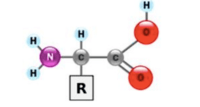
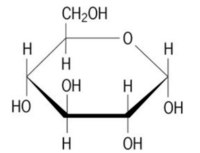
This picture shows a biomolecule that functions to build tissues and structure, aids in hormone production, and speed up chemical reactions. Which type of biomolecule is this?
Protein
Nucleic Acid
Lipid
Carbohydrate
Tags
NGSS.MS-LS1-7

Access all questions and much more by creating a free account
Create resources
Host any resource
Get auto-graded reports

Continue with Google

Continue with Email

Continue with Classlink

Continue with Clever
or continue with

Microsoft
%20(1).png)
Apple

Others
Already have an account?
Similar Resources on Wayground

34 questions
Safety Test

Quiz
•
9th - 12th Grade
32 questions
ÔN TẬP CUỐI KỲ 2- SINH HỌC 10
Quiz
•
9th - 12th Grade
42 questions
Biology Midterm Review
Quiz
•
9th - 12th Grade
41 questions
DNA and RNA Test Review
Quiz
•
9th - 10th Grade
42 questions
Cell Cycle and Mitosis
Quiz
•
9th Grade
35 questions
Science lab safety test
Quiz
•
9th Grade
40 questions
Cell Structure and Function
Quiz
•
7th - 12th Grade
37 questions
AP Biology--Cell Communication & Feedback
Quiz
•
9th Grade - University
Popular Resources on Wayground
15 questions
Fractions on a Number Line
Quiz
•
3rd Grade
10 questions
Probability Practice
Quiz
•
4th Grade
15 questions
Probability on Number LIne
Quiz
•
4th Grade
20 questions
Equivalent Fractions
Quiz
•
3rd Grade
25 questions
Multiplication Facts
Quiz
•
5th Grade
22 questions
fractions
Quiz
•
3rd Grade
6 questions
Appropriate Chromebook Usage

Lesson
•
7th Grade
10 questions
Greek Bases tele and phon
Quiz
•
6th - 8th Grade
Discover more resources for Biology
22 questions
Human Body Systems Overview
Quiz
•
9th Grade
25 questions
photosynthesis and cellular respiration
Quiz
•
9th Grade
18 questions
Enzymes and Their Functions Quiz
Quiz
•
9th Grade
20 questions
Food Chains and Food Webs
Quiz
•
7th - 12th Grade
30 questions
Exploring the World of Plants
Quiz
•
9th Grade
65 questions
Review for TEST 1
Quiz
•
9th - 10th Grade
10 questions
Exploring Food Webs and Energy Pyramids

Interactive video
•
6th - 10th Grade
20 questions
Meiosis and Sexual Reproduction
Quiz
•
9th Grade