
Subatomic particles
Authored by Michael Warf
Chemistry
9th - 12th Grade
NGSS covered
Used 917+ times


AI Actions
Add similar questions
Adjust reading levels
Convert to real-world scenario
Translate activity
More...
About
This quiz covers the fundamental topic of atomic structure, specifically focusing on subatomic particles, which is core content for high school chemistry at the 9th-12th grade level. Students need to understand the three basic subatomic particles—protons, neutrons, and electrons—including their locations within the atom, charges, and relative masses. The questions assess essential concepts such as the composition of the nucleus, the relationship between atomic number and proton count, how atomic mass relates to protons and neutrons, and the formation of ions and isotopes. Students must demonstrate their ability to interpret atomic notation, calculate the number of subatomic particles using the periodic table, and understand how changes in particle numbers affect an atom's identity and charge. The quiz requires both conceptual understanding and practical application skills, including using atomic number and mass number to determine particle quantities in specific elements and isotopes. Created by Michael Warf, a Chemistry teacher in the US who teaches grades 9-12. This comprehensive quiz serves as an excellent tool for formative assessment, allowing teachers to gauge student understanding of atomic structure before moving to more complex chemistry topics. The varied question formats make it ideal for warm-up activities to activate prior knowledge, homework assignments to reinforce classroom instruction, or review sessions before unit tests. Teachers can use this quiz to identify common misconceptions about particle location and charge, particularly regarding ion formation and isotope identification. The questions align with NGSS HS-PS1-1 (structure and properties of matter) and support state chemistry standards that require students to analyze atomic structure and explain how subatomic particles determine an element's properties and behavior in chemical reactions.
Content View
Student View
29 questions
Show all answers
1.
MULTIPLE CHOICE QUESTION
1 min • 1 pt

The nucleus of an atom contains which subatomic particles?
protons and electrons
protons and neutrons
electrons and neutrons
protons, electrons, and neutrons
Tags
NGSS.MS-PS1-1
2.
MULTIPLE CHOICE QUESTION
1 min • 1 pt

Typically in an atom, which two subatomic particles are equal in number?
protons and neutrons
all subatomic particles are equal in number
neutrons and electrons
protons and electrons
Tags
NGSS.MS-PS1-1
3.
MULTIPLE CHOICE QUESTION
1 min • 1 pt

Which subatomic particle is counted to determine the type of element the atom represents?
proton
neutron
electron
boron
Tags
NGSS.MS-PS1-1
4.
MULTIPLE CHOICE QUESTION
1 min • 1 pt
Particles in an atom that are neutral and have no charge are
5.
MULTIPLE CHOICE QUESTION
1 min • 1 pt
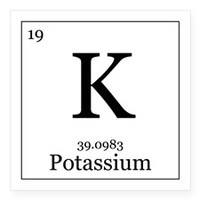
How many neutron are in the atom "K"?
29
19
58
20
Tags
NGSS.MS-PS1-1
6.
MULTIPLE CHOICE QUESTION
45 sec • 1 pt
The atomic number is equal to _.
7.
MULTIPLE CHOICE QUESTION
1 min • 1 pt
Adding or subtracting neutrons (charge = 0, mass = 1) makes the element change into an...
Tags
NGSS.HS-PS1-8

Access all questions and much more by creating a free account
Create resources
Host any resource
Get auto-graded reports

Continue with Google

Continue with Email

Continue with Classlink

Continue with Clever
or continue with

Microsoft
%20(1).png)
Apple

Others
Already have an account?
Similar Resources on Wayground

25 questions
GRHS Chemistry - Conservation of Matter Review

Quiz
•
10th - 12th Grade
25 questions
C11 History of the Earths Atmosphere & Today's Atmosphere
Quiz
•
8th - 12th Grade
30 questions
AS Chemistry Spring Final Review
Quiz
•
10th Grade
25 questions
Periodic classification of elements
Quiz
•
9th Grade
32 questions
Transmutation, Fission, Fusion and Nuclear Applications
Quiz
•
10th - 12th Grade
25 questions
Acid, Base and Salts
Quiz
•
10th Grade
24 questions
The Atom
Quiz
•
10th Grade
25 questions
Naming and Balancing Chemical Reactions Review
Quiz
•
6th - 12th Grade
Popular Resources on Wayground
15 questions
Fractions on a Number Line
Quiz
•
3rd Grade
20 questions
Equivalent Fractions
Quiz
•
3rd Grade
25 questions
Multiplication Facts
Quiz
•
5th Grade
54 questions
Analyzing Line Graphs & Tables
Quiz
•
4th Grade
22 questions
fractions
Quiz
•
3rd Grade
20 questions
Main Idea and Details
Quiz
•
5th Grade
20 questions
Context Clues
Quiz
•
6th Grade
15 questions
Equivalent Fractions
Quiz
•
4th Grade
Discover more resources for Chemistry
20 questions
Types of Chemical Reactions
Quiz
•
9th - 12th Grade
10 questions
Formative 3BC: Ionic v Covalent Bonds
Quiz
•
9th Grade
10 questions
Exploring Stoichiometry Concepts

Interactive video
•
6th - 10th Grade
20 questions
Mixed Bonding Naming
Quiz
•
9th Grade
20 questions
Naming & Writing Chemical Formulas
Quiz
•
10th Grade
20 questions
Chemical Reactions
Quiz
•
9th Grade
20 questions
Practice: E-Con, Orbital Notation, Noble Gas Notation
Quiz
•
10th Grade
20 questions
Covalent Bonding
Quiz
•
10th Grade