

Law of Conservation of Mass

Presentation
•
Science
•
6th - 8th Grade
•
Practice Problem
•
Hard
Standards-aligned

Boaz Rottet
Used 4+ times
FREE Resource
13 Slides • 2 Questions
1
Law of Conservation of Mass
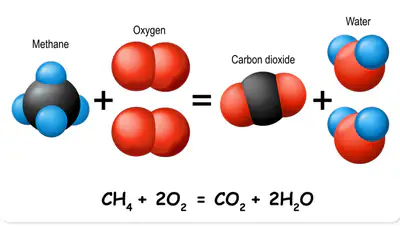
In today's lesson you will learn about chemical equations.
2
Today, we are going to start off with an experiment!
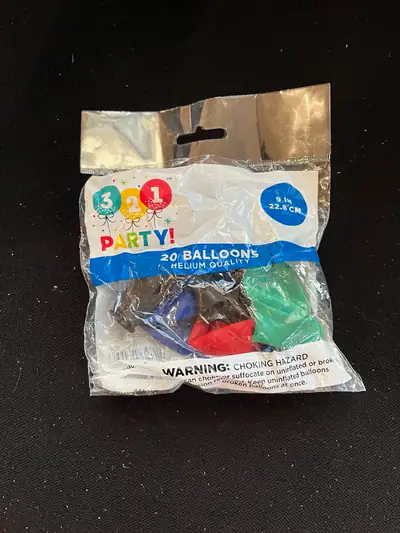
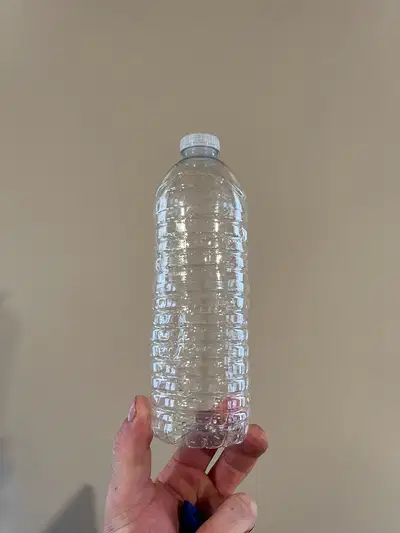
The supplies that are needed are in the image below.
What type of chemical reaction do you think I can make with these ingredients? Endothermic or Exothermic?


3
Time To experiment!!!
If something goes wrong, I need a volunteer to teach the rest of the class for me.

4

Reactants
Acetic Acid = Vinegar
Sodium Bicarbonate = Baking Soda
Products
Sodium Acetate = Crystalized Salt
5
What is a chemical reaction?
During a chemical reaction, the atoms get rearranged to form something new.
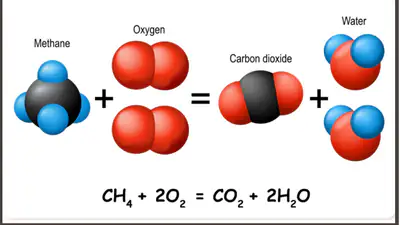
When looking at chemical equations, we need to make sure that we do not delete any atoms from existence!
What do you notice while looking at the image to the right?

6
7
Multiple Select
Which of the following occur during a chemical reaction?
Select 2 out of the 4.
Atoms are rearranged
At least one new substance is formed
New matter is created
Some energy is destroyed
8
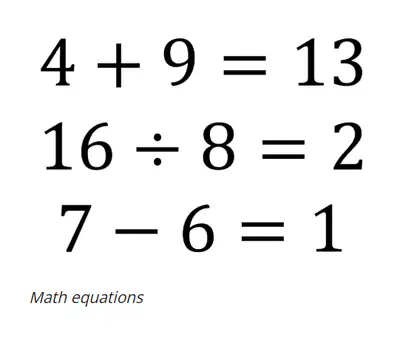
When you need to do a math problem, you will often write an equation. A math equation is a model that represents how numbers interact in a problem.
Equations can be simple, like the ones shown here, or they can be long and complex. However, all math equations have one thing in common. Math equations have the same value on either side of the equal sign.
9
In a previous lesson, you learned how atoms of elements form bonds. Now, you will learn how scientists use chemical equations as models to represent the chemical reactions that form and break bonds. In this lesson, you will learn about:
chemical reactions
the law of conservation of mass
chemical equations
During a chemical reaction, a chemical change occurs. Chemical changes rearrange atoms to form a new substance. During a chemical reaction, the atoms that already exist within a system are rearranged. No new atoms enter the system, and no atoms leave the system.
10
Law of Conservation of Mass
Recall that a scientific law is something in nature that scientists notice always seems to be true. A scientific law, like a scientific theory, is supported by a great many observations. One scientific law that always seems to be true is the law of conservation of mass.
The law of conservation of mass states that matter cannot be created or destroyed. Recall that matter is anything that has mass and takes up space. The amount of matter in a system stays constant during a chemical change.


11
Multiple Choice
Sometimes mass is created during a chemical reaction.
True
False
12
We will need to balance chemical equations to show that matter has not been created nor destroyed.
Let's take a few minutes to try to practice this idea.
On the next slide, there is a simulation where you can see if you have what it takes to be the balancing chemical equations king or queen!!
After that, I have a video on the following slide that will hopefully clear up any and all confusion!

13
14
15

Law of Conservation of Mass
In today's lesson you will learn about chemical equations.
Show answer
Auto Play
Slide 1 / 15
SLIDE
Similar Resources on Wayground

15 questions
Types of Cells
Presentation
•
6th - 8th Grade
11 questions
Journey to the Center: Exploring the Layers of the Earth
Presentation
•
6th - 8th Grade
12 questions
Chemical energy quiz
Presentation
•
6th - 8th Grade
11 questions
Types of Slope
Presentation
•
7th - 8th Grade
9 questions
Parts of Speech!
Presentation
•
6th - 8th Grade
12 questions
Atoms and Elements review
Presentation
•
6th - 8th Grade
11 questions
PHYSICAL AND CHEMICAL PROPERTIES
Presentation
•
6th - 8th Grade
11 questions
Balancing Equations: Practice
Presentation
•
6th - 8th Grade
Popular Resources on Wayground
19 questions
Naming Polygons

Quiz
•
3rd Grade
10 questions
Prime Factorization
Quiz
•
6th Grade
20 questions
Math Review
Quiz
•
3rd Grade
15 questions
Fast food
Quiz
•
7th Grade
20 questions
Main Idea and Details
Quiz
•
5th Grade
20 questions
Context Clues
Quiz
•
6th Grade
20 questions
Inferences
Quiz
•
4th Grade
19 questions
Classifying Quadrilaterals
Quiz
•
3rd Grade
Discover more resources for Science
16 questions
Interactions within Ecosystems
Presentation
•
6th - 8th Grade
12 questions
PS.8.1.2, PS.8.1.3, PS.8.1.5 Review
Quiz
•
8th Grade
20 questions
Rocks and The Rock Cycle
Quiz
•
6th Grade
20 questions
Moon Phases and Eclipses
Quiz
•
6th - 8th Grade
16 questions
Photosynthesis and Cellular Respiration Review
Quiz
•
7th Grade
20 questions
Human Body Systems
Quiz
•
6th Grade
22 questions
6th & 8th Grade Science Material SOL Review
Quiz
•
6th - 8th Grade
15 questions
Punnett Squares
Quiz
•
6th Grade