Search Header Logo
Matter and Their Three States

Matter and Their Three States

Assessment

Presentation

Science

5th Grade

Hard

Created by

Joseph Anderson

FREE Resource

23 Slides • 44 Questions

1

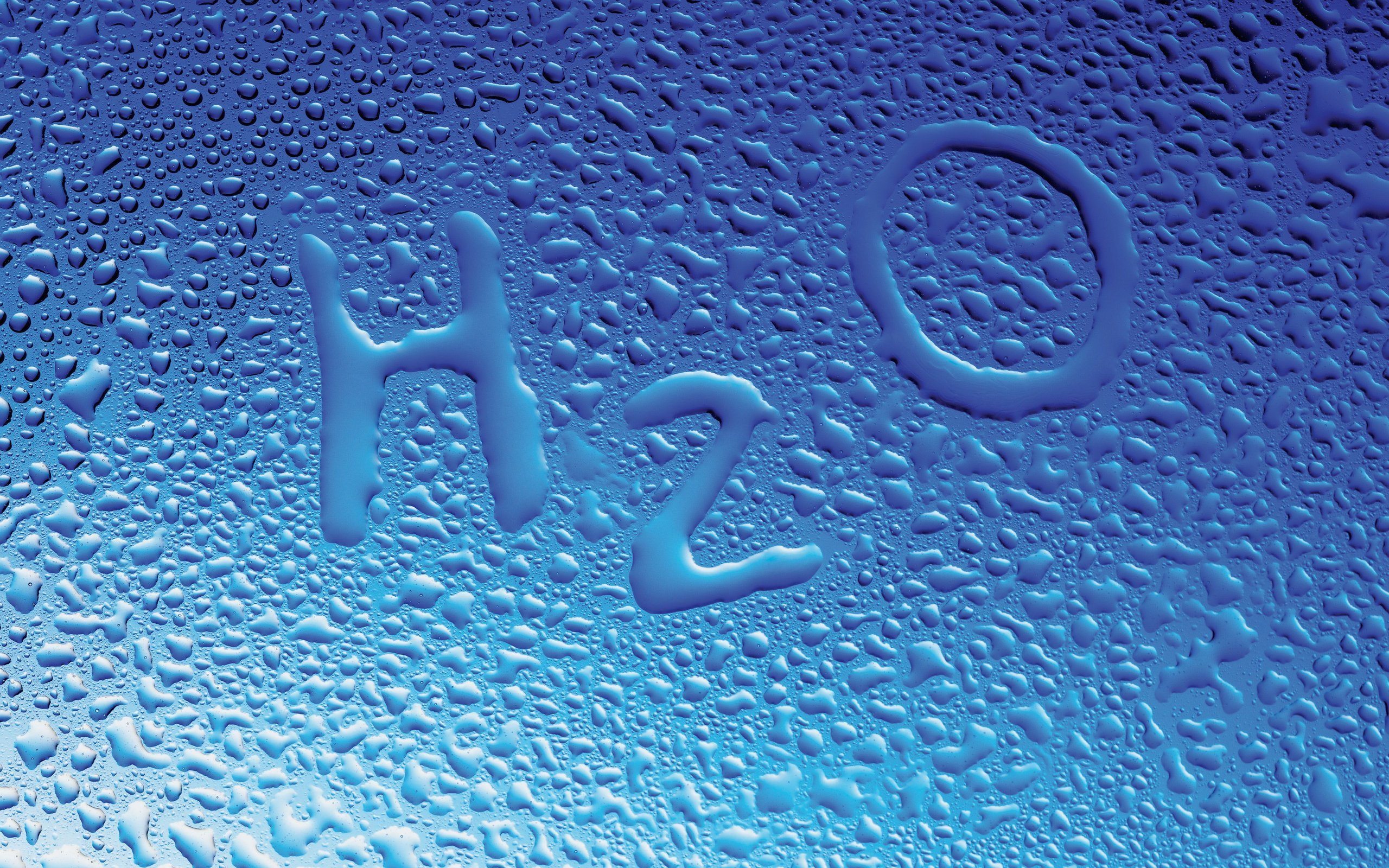
States of Matter

Time to learn all we can about Matter

media

2

Multiple Select

Select the three states of matter: (pick 3)

1

Solid

2

Air

3

Gas

4

Water

5

Liquid

3

media

4

media

5

Solids

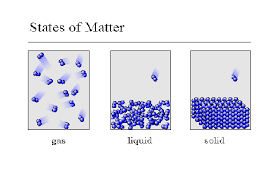
Are characterized by molecules that are so close together, barely any movement is possible.

A Solid has a definite volume and definite shape.

media

6

Liquids

Have molecules that are flowing freely, far enough away from each other to allow some movement.

A Liquid has a definite volume but no definite shape.

media

7

Gases

A characterized by molecules that far apart from each other, making it easy for them to move around

A Gas has no definite volume and no definite shape.

media

8

Multiple Select

Let's try this again.

Select the three states of matter: (pick 3)

1

Solid

2

Air

3

Gas

4

Water

5

Liquid

9

media

10

media

11

media

12

Multiple Choice

A ___________ substance has a definite volume but not a definite shape.

1

gas

2

liquid

3

solid

13

Multiple Choice

The particles in a _____________ vibrate, are close together, and do not move freely.

1

liquid

2

gas

3

solid

14

Multiple Choice

This state of matter takes both the shape and volume of it container.

This is harder.. Think about it before you answer...

1

gas

2

solid

3

liquid

15

Changing States of Matter

media

16

media

17

media

18

media

19

media

20

media

21

media

22

Multiple Choice

What causes a change in the states of matter?

1

Light

2

Temperature

3

Container

23

Multiple Choice

Question image
The phase change from water vapor to liquid water is known as...
1

evaporation

2

precipitation

3

condensation

4

sublimation

24

Multiple Choice

Question image

What is the change from a Liquid to a Gas due to the gaining of energy?

1

Condensation

2

Vaporization

3

Evaporation

4

Deposition

25

Multiple Choice

When the temperature of matter increases the particles...
1

speed up and move closer

2

speed up and move farther apart

3

slow down and move closer together

4

slow down and move farther apart

26

Multiple Choice

Question image

Parker's mom brought a glass of cold water outside. After a few minutes, drops began to form on the outside of the glass. Which process does the water on the outside of the glass demonstrate?

1

boiling

2

freezing

3

condensation

4

evaporation

27

Multiple Choice

Question image

Mr. Magner builds a snow man. As the sun comes out, he notices the snow man begins to get smaller and a puddle of water forms on the ground under the snow man. What type of change is taking place?

1

liquid melting to become gas

2

liquid freezing to become solid

3

solid freezing to become liquid

4

solid melting to become liquid

28

Multiple Choice

Question image

Mrs. May placed a pot of water on a stove for 15 minutes. She observed that the water began to bubble and that the water level dropped. Which explanation below describes what is happening to the water?

1

The water is cooling.

2

The water is freezing.

3

The water is boiling and is evaporating.

4

The water is melting and is disappearing.

29

Multiple Choice

Question image

Mrs. Rover had an empty beaker. She quickly put a balloon over the top of the beaker and placed the beaker on a hot plate. Mrs. Rover illustrated her results.

Which of the following shown by the investigation?

1

Heating the gas inside the beaker inflated the balloon.

2

Heating the gas inside the beaker made the balloon shrink.

3

Heating the gas inside the beaker added water to the balloon.

4

Heating the gas inside the beaker causes no change to the balloon.

30

Multiple Choice

Question image

The three states of matter are solid, liquid, and gas.

How is a solid different from a liquid?

1

A solid has a definite shape. A liquid takes the shape of its container.

2

A solid takes the shape of its container. A liquid has a definite shape.

3

A solid has a definite volume. A liquid does not have a definite volume.

4

A solid does not have a definite volume. A liquid has a definite volume.

31

Multiple Choice

You want to observe a change in state. What could you do to change liquid water to water vapor?

1
2
3
4

32

Multiple Choice

Freezing and melting are opposite processes. Which process is the opposite of condensing?

1

cooling

2

evaporating

3

freezing

4

melting

33

Multiple Choice

Question image

Mrs. Gallenbeck wanted to learn how water changes state. Her investigation is shown in the picture.

What will happen?

1

It will melt.

2

It will freeze.

3

It will condense.

4

It will evaporate.

34

States of Matter

What are the similarities between solids, liquids and gases?

What are the differences between solids, liquids and gases?

How does particle motion affect the state of matter?

Write down your answers.

You will be asked to share with your group.

media

35

Multiple Choice

Matter that has a definite shape and definite volume is ...

1

solid

2

liquid

3

gas

4

plasma

36

Multiple Choice

Matter that has no definite volume or shape is...

1

solid

2

liquid

3

gas

37

Multiple Choice

Milk takes the shape of its container because it is a:
1

solid

2

liquid

3

gas

38

Multiple Choice

Molecules are closest together in what state of matter?

1

Solid

2

Liquid

3

Gas

4

plasma

39

Multiple Choice

Which state of matter does not have a definite shape but does have a definite volume?

1

Solid

2

Liquid

3

Gas

40

Multiple Choice

Question image
A gas
1

has a definite shape but no definite volume

2

has a definite volume but no definite shape

3

has fast-moving particles

41

Multiple Choice

___________ is anything that has mass and takes up space.

1

Molecules

2

Matter

3

Volume

42

Fill in the Blank

Matter is anything that has _________ and takes up space.

43

Each State of Matter is defined by how their particles behave.


1How close the molecules are to one another, and 2how quickly they move determine what state of matter a substance is in.

44

Draw

Draw an example of a solid.

45

Draw

Draw an example of a liquid

46

Draw

Draw an example of a gas.

47

Solid

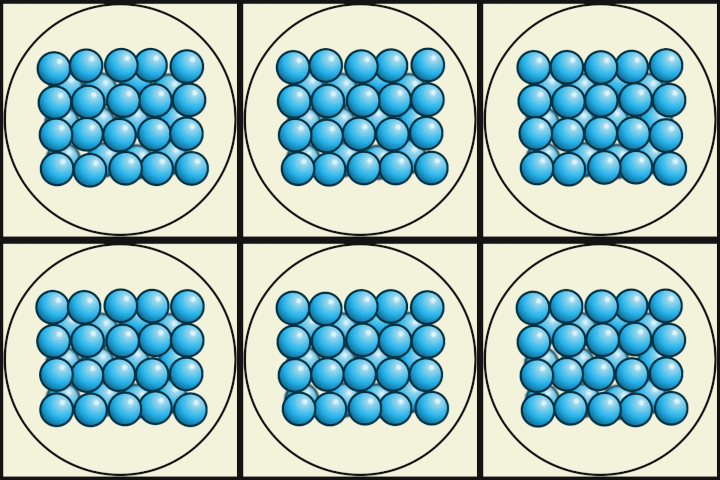
In a solid, particles are packed tightly together so they don't move much, but are dense. The electrons of each particle are constantly in motion, giving the atoms a small vibration, but they are fixed in their position.

Solids have a definite shape, as well as mass and volume, and do not conform to the shape of the container in which they are placed. 

media

48

Hotspot

Which one represents the solid?

Click on the solid.

49

Liquid

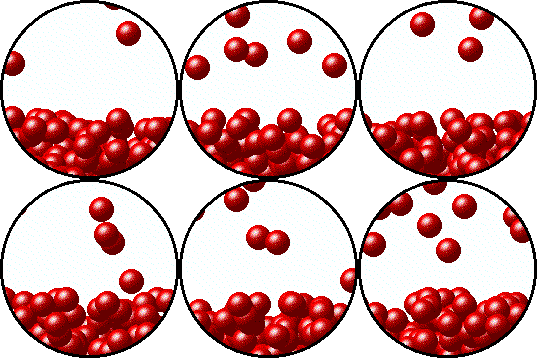
In a liquid, the particles are more loosely packed than in a solid, but closely enough that it is not easily compressible.

The particles are able to flow around each other, giving the liquid an indefinite shape. Therefore, the liquid will conform to the shape of its container.

media

50

Hotspot

Which one represents the liquid?

Click on the liquid.

51

Gas

In a gas, the particles have a great deal of space between themso they move easily, and have high kinetic energy (energy of movement).

media

52

Hotspot

Which one represents the gas?

Click on the gas.

53

Gas

media

​When a gas is put under pressure by reducing the volume of the container, the space between particles is reduced and the gas is compressed.

54

Liquid on the other hand...

In a liquid, the particles are already close together, so it is not easily compressed.

media

55

Multiple Choice

Which state of matter has a fixed volume and mass?

1

Solid

2

Liquid

3

Gas

4

Plasma

56

Multiple Choice

Which state of matter fills a container?

1

Solid

2

Liquid

3

Gas

4

Plasma

57

Multiple Choice

Which state of matter has a definite shape?

1

Solid

2

Liquid

3

Gas

4

Plasma

58

Reorder

Reorder the following in order from MOST energy to LEAST energy.

1
2
3

59

Multiple Choice

Particles vibrate in place and do not change relative positions.

1

solid

2

liquid

3

gas

60

Multiple Choice

What happens to particles when the temperature increases?

1

The particles move slower

2

The particles move faster

3

The particles lose mass

4

The particles gain mass

61

Multiple Choice

When water sits in the freezer and freezes into ice, it is because the water has...

1

gained mass

2

gained energy

3

lost mass

4

lost energy

62

Multiple Choice

When air in a hot air balloon is heated the air inside the baloon...
1

expands

2

contracts

3

evaporates

4

condenses

63

Multiple Choice

If an object has particles that are moving very slowly, the object's temperature is probably ______.
1

hot

2

small

3

cold

4

big

64

Multiple Choice

Question image
What phase change occurs between points B and C if heat is added?
1

Freezing

2

Melting

3

Boiling

4

Condensing

65

Multiple Choice

Question image
Which phase change occurs between points B and C if heat is REMOVED
1
Freezing
2
Boiling
3
Melting
4
Condensing

66

Multiple Choice

Question image
Which state of matter exists between point A and B?
1
Solid
2
Liquid
3
Gas

67

Multiple Choice

Question image
Which substance is the gas?
1

A

2

B

3

C

States of Matter

Time to learn all we can about Matter

media

Show answer

Auto Play

Slide 1 / 67

SLIDE