
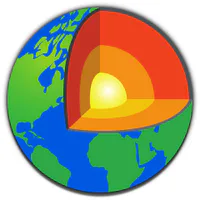
Layers of the Earth
Presentation
•
Science
•
7th Grade
•
Hard

Joseph Anderson
FREE Resource
8 Slides • 9 Questions
1
Layers of the Earth
Science 23-24
MS-ESS2-1
2
Word Cloud
Use one or two words and tell me what you think of when you hear "Layers of the Earth"
3
Two main ways scientists understand the inside of Earth:
- Rock Samples
- Drilled up from 7 miles deep
- Volcanos carry rock from 60 miles deep
- Seismic Waves
Scientists use earthquake data to understand what makes up the inside of the Earth
How do we know?
4
There are 4 main layers of the Earth. Each of these has different compositions, thicknesses, and properties.
The 4 main layers are:
- Crust
- Mantle
- Outer Core
- Inner Core
The Layers
5
Multiple Choice
How do scientists know what's inside the Earth?
Rock Samples and Earthquakes
We've sent equipment to the center of the Earth
A massive x-ray machine
Time travel back to watch the Earth form
6
Multiple Choice
Which of these is NOT a layer of the Earth?
Crust
Mantle
Core
Skin
7
The crust of the Earth is a layer of solid rock that includes both dry land and the ocean floor. It is the thinnest of the layers
- Only 5-80 km thick
- Two types of Crust:
- Oceanic
- Continental
Crust
8
Dropdown
9
Mostly Basalt - dark, dense rock
Much heavier than Continental Crust
Oceanic Crust
Mostly similar to Granite - light, coarse rock
Forms the Continents
Lighter than Oceanic Crust
Continental Crust
10
Hotspot
Where in this picture would we find Continental Crust?
Select all that are correct.
11
- Directly below the Crust.
- Nearly 3,000 km thick
- Temp goes up the deeper you go - range from: 1,600°C to 2,900°C
- Material is still solid but very bendable - think tinfoil
- Where convection currents happen
Mantle
12
Multiple Choice
Which layer has convection currents?
Continental Crust
Oceanic Crust
Mantle
Moon
13
Labelling
Label the layers.
Mantle
Oceanic Crust
Continental Crust
14
Molten metal (nickel and iron) surrounding the inner core.
2,200 km thick
4,500°C - 5,500°C
Outer Core
Solid metal (nickel and iron) under extreme pressure
1,220 km radius
5,000°C - 5,500°C
Inner Core
15
Open Ended
The Inner core is solid and the Outer core is liquid, even though they are about the same temperature. Why is the Inner core solid?
16
17
Reorder
Put the layers of the Earth in order from outside to inside.
Crust
Mantle
Outer Core
Inner Core
Layers of the Earth
Science 23-24
MS-ESS2-1
Show answer
Auto Play
Slide 1 / 17
SLIDE

Similar Resources on Wayground
12 questions
Energy Review
Lesson
•
8th - 10th Grade
13 questions
Repetition vs. Replication
Lesson
•
7th Grade
15 questions
Heredity review
Lesson
•
7th Grade
12 questions
Solutions
Lesson
•
8th Grade
12 questions
Fronts
Lesson
•
7th Grade
13 questions
U2L4: Plant Responses
Lesson
•
7th Grade
15 questions
Physical Chemical Changes
Lesson
•
7th Grade
13 questions
Density and Air Pressure Lesson
Lesson
•
7th Grade
Popular Resources on Wayground
10 questions
5.P.1.3 Distance/Time Graphs
Quiz
•
5th Grade
10 questions
Fire Drill
Quiz
•
2nd - 5th Grade
20 questions
Equivalent Fractions
Quiz
•
3rd Grade
15 questions
Hargrett House Quiz: Community & Service
Quiz
•
5th Grade
20 questions
Main Idea and Details
Quiz
•
5th Grade
20 questions
Context Clues
Quiz
•
6th Grade
20 questions
Inferences
Quiz
•
4th Grade
15 questions
Equivalent Fractions
Quiz
•
4th Grade
Discover more resources for Science
19 questions
Introduction to Properties of Waves
Lesson
•
6th - 8th Grade
16 questions
Interactions within Ecosystems
Lesson
•
6th - 8th Grade
10 questions
Exploring the Layers of the Earth
Interactive video
•
6th - 10th Grade
20 questions
Electricity and Circuits
Quiz
•
7th Grade
16 questions
Photosynthesis and Cellular Respiration Review
Quiz
•
7th Grade
8 questions
VP #9: Amoeba Sisters Pedigrees
Interactive video
•
7th Grade
15 questions
Mitosis Amoeba Sister Video
Interactive video
•
7th Grade
20 questions
Food Webs + Energy Pyramids
Quiz
•
7th Grade