
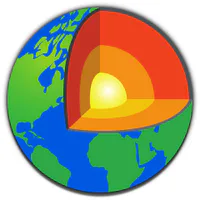
Earth's Layers and Seismic Waves

Presentation
•
Science
•
7th Grade
•
Hard

Joseph Anderson
FREE Resource
8 Slides • 9 Questions
1

2
Word Cloud

Use one or two words and tell me what you think of when you hear "Layers of the Earth"
3

4

5
Multiple Choice

How do scientists know what's inside the Earth?
6
Multiple Choice
7

8
Dropdown

9


10
Hotspot
11

12
Multiple Choice
13
Labelling
14

15
Open Ended

The Inner core is solid and the Outer core is liquid, even though they are about the same temperature. Why is the Inner core solid?
16
17
Reorder

Put the layers of the Earth in order from outside to inside.
Show answer
Auto Play
Slide 1 / 17
SLIDE
Similar Resources on Wayground

12 questions
Qualitative vs Quantitative Observations
Lesson
•
7th Grade
12 questions
Biotechnology - GMO - 1/5/2020
Lesson
•
6th - 7th Grade
15 questions
Listening to Earth
Lesson
•
7th Grade
12 questions
Geologic Time
Lesson
•
7th Grade
9 questions
The Immune System
Lesson
•
7th Grade
12 questions
Revisit: Volcanos!
Lesson
•
7th Grade
12 questions
Living Things
Lesson
•
KG
13 questions
Frog Dissections
Lesson
•
7th Grade
Popular Resources on Wayground
15 questions
Fractions on a Number Line

Quiz
•
3rd Grade
20 questions
Equivalent Fractions
Quiz
•
3rd Grade
25 questions
Multiplication Facts
Quiz
•
5th Grade
29 questions
Alg. 1 Section 5.1 Coordinate Plane
Quiz
•
9th Grade
22 questions
fractions
Quiz
•
3rd Grade
11 questions
FOREST Effective communication
Lesson
•
KG
20 questions
Main Idea and Details
Quiz
•
5th Grade
20 questions
Context Clues
Quiz
•
6th Grade
Discover more resources for Science
10 questions
Exploring the Rock Cycle

Interactive video
•
6th - 8th Grade
20 questions
Flow of Energy
Quiz
•
7th Grade
12 questions
Ecological Succession
Quiz
•
7th Grade
20 questions
Waves and Wave Properties
Quiz
•
6th - 8th Grade
10 questions
Understand Ecosystem Roles and Energy Flow
Interactive video
•
6th - 8th Grade
10 questions
Exploring the Rock Cycle: Types and Formation
Interactive video
•
6th - 8th Grade
15 questions
Independent and Dependent Variables
Quiz
•
7th Grade
20 questions
Natural Selection and Selective Breeding
Quiz
•
7th Grade