

Layers & Convection Review

Presentation
•
Science
•
9th - 12th Grade
•
Easy
+6
Standards-aligned

Matt Oliphant
Used 6+ times
FREE Resource
4 Slides • 15 Questions
1

2
3
4
5
Multiple Choice
6
Multiple Choice

7
Multiple Choice
8
Multiple Choice
9
Multiple Choice
10
Multiple Choice
11
Multiple Choice
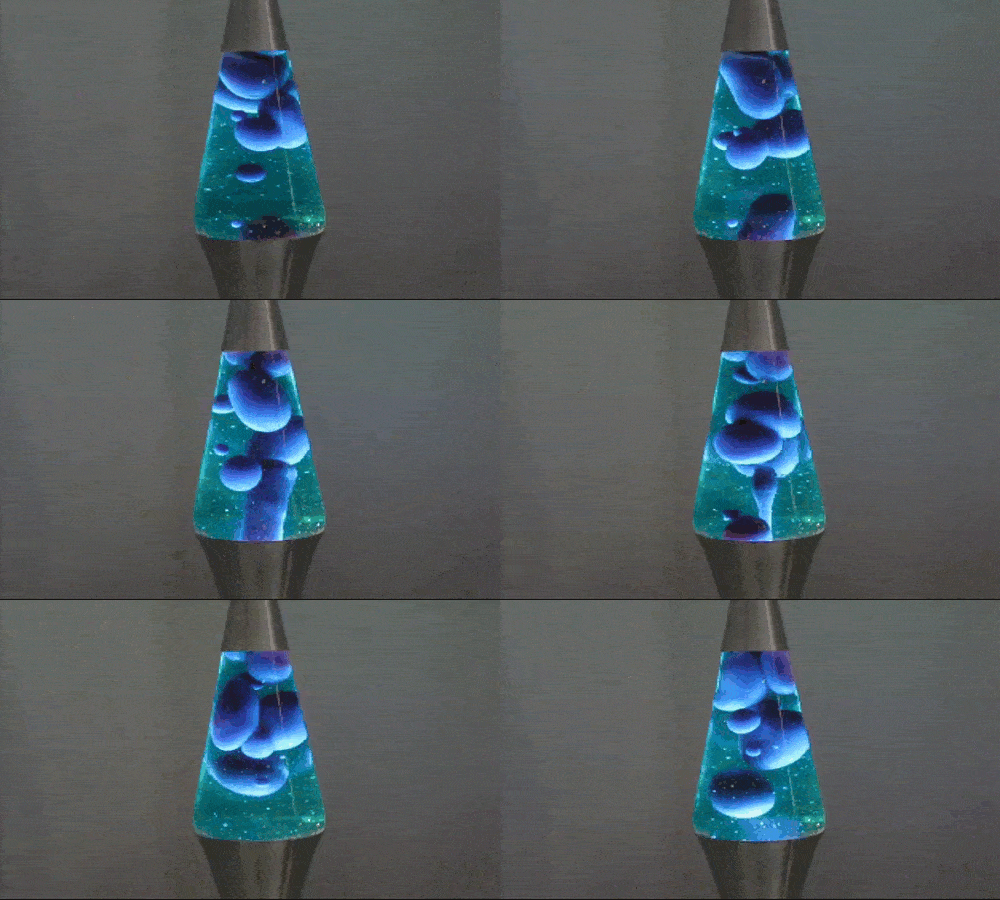
A certain type of decorative lamp contains colored liquids. These liquids form globs that break off and rise to the top of the liquid. The globs rise due to
12
Multiple Choice

13
Multiple Choice
14
Multiple Choice

Which layer of the Earth is liquid?
15
Multiple Choice

16
Multiple Choice
17
Multiple Choice
18
Multiple Choice
19
Multiple Choice
Show answer
Auto Play
Slide 1 / 19
SLIDE
Similar Resources on Wayground

13 questions
Precambrian Earth History Lesson
Lesson
•
9th - 12th Grade
13 questions
What Happens at Divergent Boundaries
Lesson
•
9th - 12th Grade
17 questions
Atmosphere and Climate Change
Lesson
•
9th - 12th Grade
15 questions
Lifecycle of Stars
Lesson
•
9th - 12th Grade
12 questions
In-text Citations
Lesson
•
9th - 12th Grade
14 questions
02-01-99-Recap 1
Lesson
•
KG
16 questions
Elements of Tragedy
Lesson
•
9th - 12th Grade
14 questions
Structure of Solar System
Lesson
•
9th - 12th Grade
Popular Resources on Wayground
15 questions
Fractions on a Number Line

Quiz
•
3rd Grade
20 questions
Equivalent Fractions
Quiz
•
3rd Grade
25 questions
Multiplication Facts
Quiz
•
5th Grade
29 questions
Alg. 1 Section 5.1 Coordinate Plane
Quiz
•
9th Grade
22 questions
fractions
Quiz
•
3rd Grade
11 questions
FOREST Effective communication
Lesson
•
KG
20 questions
Main Idea and Details
Quiz
•
5th Grade
20 questions
Context Clues
Quiz
•
6th Grade
Discover more resources for Science
8 questions
Momentum and Collisions
Lesson
•
9th - 12th Grade
25 questions
Naming Ionic and Covalent Compounds
Quiz
•
9th Grade
10 questions
Exploring Weathering, Erosion, and Deposition Processes

Interactive video
•
6th - 10th Grade
10 questions
Cladogram Practice
Quiz
•
9th Grade
12 questions
The Respiratory System
Lesson
•
9th - 12th Grade
14 questions
Natural Selection and Adaptation
Lesson
•
9th - 12th Grade
10 questions
Exploring the Rock Cycle and Plate Tectonics
Interactive video
•
6th - 10th Grade
15 questions
Chemical Reactions (Types of Chemical Reactions)
Interactive video
•
11th Grade