Search Header Logo
kinetic theory of gases

kinetic theory of gases

Assessment

Presentation

Science

9th Grade

Practice Problem

Medium

NGSS
MS-PS1-4, MS-PS3-5, MS-PS3-4

Standards-aligned

Created by

April Elmore

Used 5+ times

FREE Resource

0 Slides • 16 Questions

1

Multiple Choice

Which best describes a solid?

1

The state of matter that has a fixed shape and fixed volume

2

The molecules of a solid move with a high speed in random order

3

The state of matter that has a fixed volume and takes the shape of its container

4

Molecules move past one another, vibrate, and rotate

2

Multiple Choice

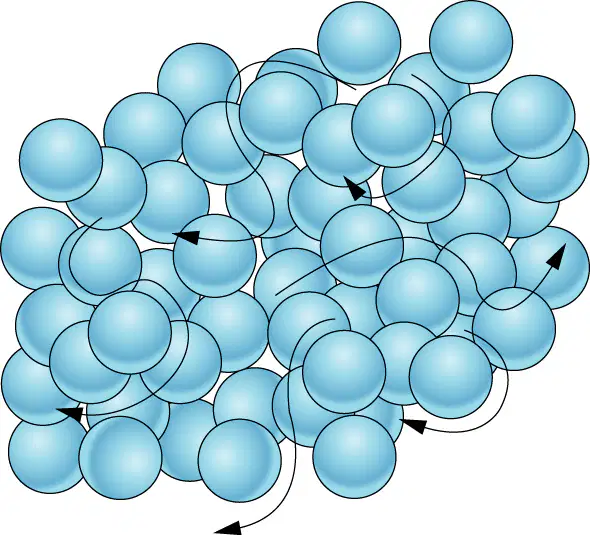
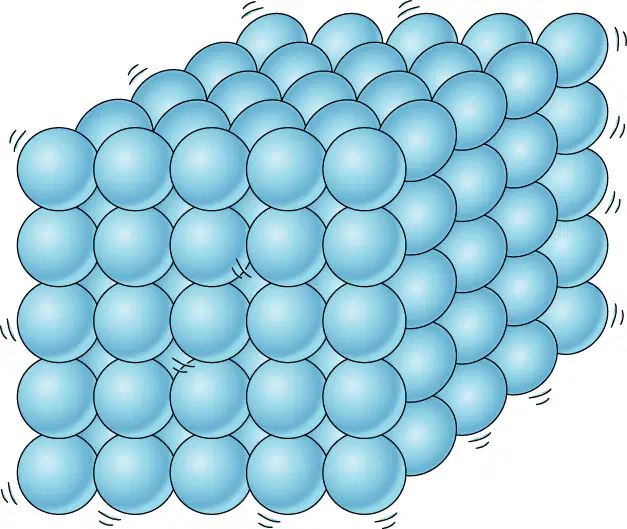
Question image

Which state of matter is shown?

1

sold

2

liquid

3

gas

4

plasma

3

Multiple Choice

Which is an assumption of the kinetic theory of gases?

1

Gas are made up of particles that move at a constant, random motion

2

Gases can be compressed

3

Evaporation is a state change

4

When particles of a gas collide a large amount of energy is lost

4

Multiple Choice

Which is FALSE about melting?

1

solid change to a liquid

2

particles gain enough energy to move past each other

3

the heat of fusion is needed to melt a solid

4

the heat of vaporization is needed to melt a solid

5

Multiple Choice

Question image

Which state is shown.

1

gas

2

solid

3

liquid

4

plasma

6

Multiple Choice

Question image

Which part of the graph has no temperature change

1

The part labeled ice

2

The part labeled freezing/melting

3

The part labeled water

4

The part labeled gas

7

Multiple Choice

Most matter __________ when heated

1

condenses

2

solidifies

3

contracts

4

expands

8

Multiple Choice

What occurs when the vapor pressure of a liquid equals the atmospheric pressure?

1

condensation

2

freezing

3

melting

4

boiling

9

Multiple Choice

What happens to KE when the temperature increases?

1

Nothing

2

It increases because particles move faster

3

It decreases because particles slow down

4

10

Multiple Choice

Why does the balloon shrink in liquid nitrogen?

1

The particles move apart and speed up

2

The particles slow down and move closer together since the temperature decreases.

3

Balloon shrink in all liquids

4

The liquid nitrogen damages the balloon.

11

Multiple Choice

Question image

Which state of matter is shown?

1

gas

2

liquid

3

solid

4

plasma

12

Multiple Choice

This state has the lowest amount of energy. The particles mainly vibrate.

1

gas

2

solid

3

liquid

4

plasma

13

Multiple Choice

According to the kinetic molecular theory, all collisions between gas molecules are inelastic; all kinetic energy is lost.

1

True

2

False

14

Multiple Choice

Liquid changing to a gas just at its surface.

1

condensation

2

evaporation

3

melting

4

boiling

15

Multiple Select

What is true about an amorphous solid?

1

It does not have a melting point- it has a range of temperatures at which it melts

2

It behaves like all other solids

3

Glass and butter are examples

4

16

Multiple Choice

What is sublimation?

1

changing from a solid to a vapor

2

vapor changes to a solid

3

vapor changes to a liquid

4

liquid changes to a solid

Which best describes a solid?

1

The state of matter that has a fixed shape and fixed volume

2

The molecules of a solid move with a high speed in random order

3

The state of matter that has a fixed volume and takes the shape of its container

4

Molecules move past one another, vibrate, and rotate

Show answer

Auto Play

Slide 1 / 16

MULTIPLE CHOICE