
- Resource Library
- Science
- Engineering & Science Practices
- Scientific Inquiry
- 8th Grade Nature Of Science Lesson Scientific Inquiry
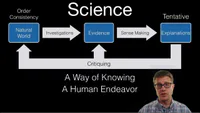
8th Grade Nature of Science Lesson Scientific Inquiry

Presentation
•
Science
•
8th Grade
•
Hard
+14
Standards-aligned

Richard Thomas
FREE Resource
20 Slides • 6 Questions
1


Nature of Science
The Practice of science
8th Grade Comprehensive Science
2

Objectives:
After completing this lesson, you will be able to:
-Identify what characterizes Science and its methods
- List and compare the methods of Scientific experimentation in different fields of science
- Distinguish between scientific and pseudoscientific ideas
- Organize and conduct and an experiment by following prescribed procedures
- Develop a scientific investigation/experiment
3

Academic Vocabulary
directions
1. In your science notebook, Copy each term
2. write a definition in your own words
3. Draw a picture of each (to help you remember the new term)
4

Academic Vocabulary
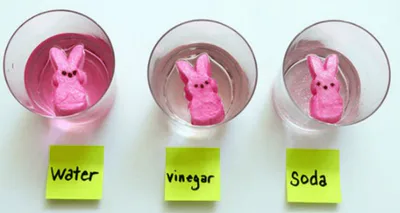
Investigation - a procedure carried out to carefully observe the natural
world; NO hypothesis, “let’s just see what happens!”
Example
what will happen when the marshmallow
Bunnies are added to different liquids?
● no hypothesis
● set up the Investigation and observe
● Record your observations
5

Academic Vocabulary
Hypothesis- A possible explanation about an observation
that can be tested by scientific investigation.
(Usually in the “If_____, Then_____, Because ____.” format)
Example
If bean plants are given different amounts of fertilizer, then the plants that
receive the most fertilizer each week (10 mL) will grow faster, because they get
more nitrogen when they have fertilizer.
6


7


8

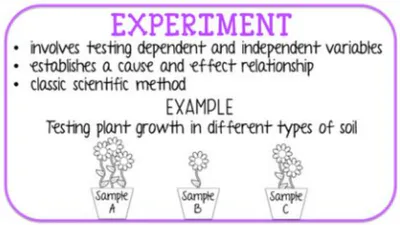
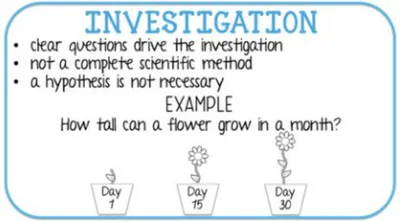
A controlled test
with variables, a
hypothesis, a
control and multiple
trials that can be
replicated and
repeated with same
results.
Not as controlled
with no variables or
hypothesis. Simply
just, “I wonder what
will happen if…”
9

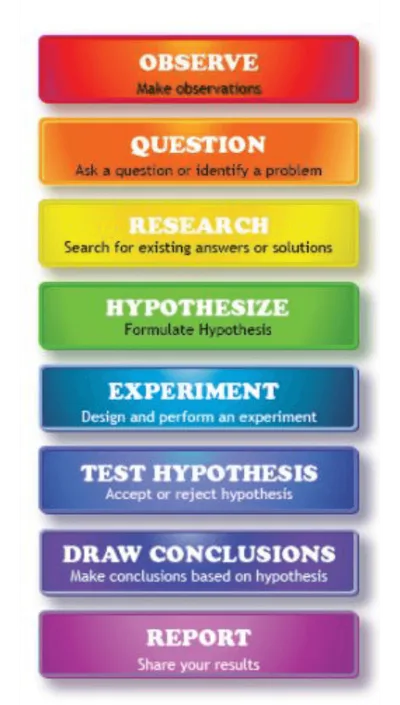
The Scientific process
A systematic and logical process that
scientists use to solve problems.
Draw and label this diagram
in your notebook.
Note: Sometimes, it doesn’t have to go in this order!
10

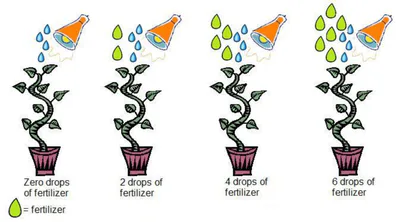

Academic Vocabulary
Control Group
the part of an experiment that you do NOTHING to; it contains
all the same factors and is used as a comparison to the
experimental group.
11

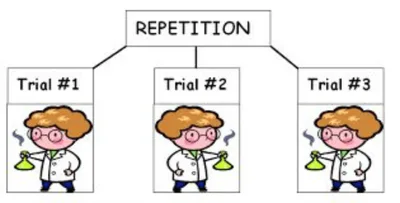
Academic vocabulary
Repetition - one person conducting the exact experiment over and over
and over again, getting the same or very similar results each time
12

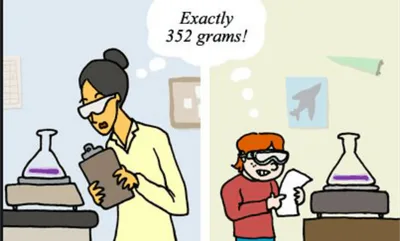
Academic vocabulary
Replication- when someone else (other than the original researcher)
carries out an experiment exactly and gets the same results over and over
again
13

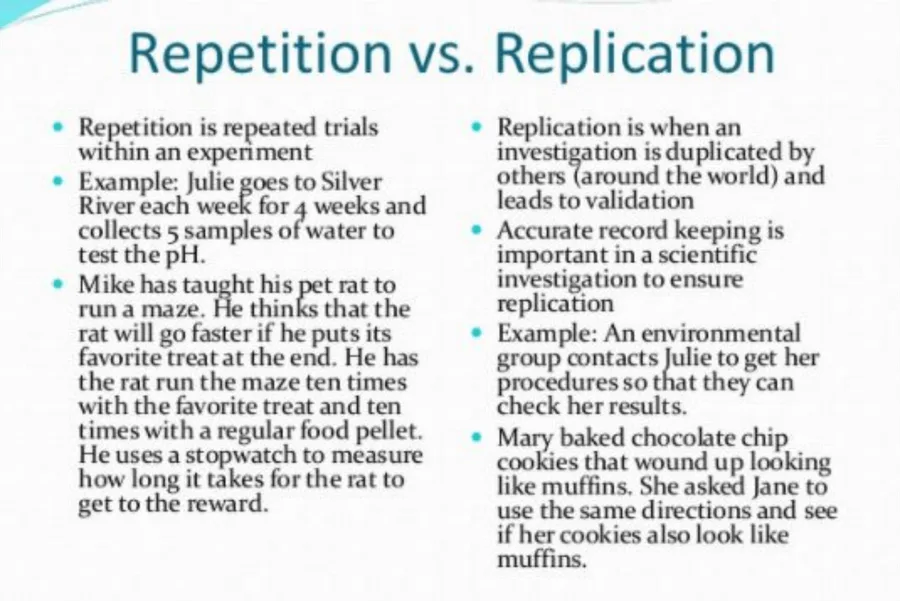
Read
Use this
outline to
add one
example to
each part
of the
chart on
the next
slide.
14

Replication
Repetition
Definition
(in your own words)
Who conducts
Example
Draw & Complete In your Science Notebook
15

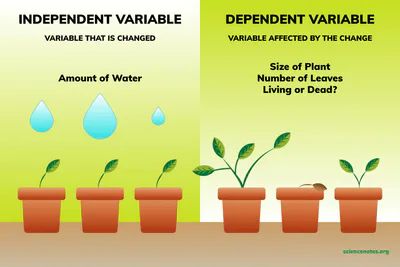
Academic vocabulary
Independent (test) Variable -The
one factor that is changed on
purpose in an experiment
Dependent (outcome) Variable -
The variable that’s being measured
in an experiment; what is being
affected by the change
16



Academic Vocabulary
Systematic Observation - the act of using one
or more of your senses to gather Information
and take note of What occurs.
Empirical Evidence - data and observations that are
collected through scientific processes (observations,
investigations and experimentation) that help
validate or explain a particular observation
17


Let’s practice…
1.
In your science notebook, number 1-3. Leave space in
between each.
2.
Read each of the three (3) experimental scenarios and
try to identify the independent, dependent and
control variables.
18


Experimental Scenario #1
Identify the Following
Independent (test) variable:
Dependent (outcome)
variable:
Control group:
19

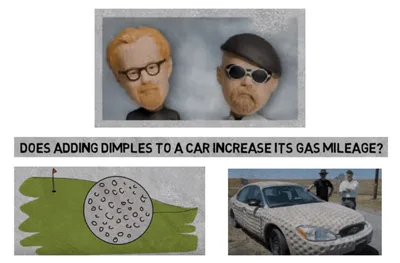
Experimental Scenario #2
Identify the Following
Independent (test) variable:
Dependent (outcome)
variable:
Control group:
20


Experimental Scenario #3
Identify the Following
Independent (test) variable:
Dependent (outcome)
variable:
Control group:
21
Multiple Choice
A controlled experiment is designed to test
The effective one variable on other
all the variables
the controlled variables only
22
Multiple Choice
Repetition is when one scientist
copies another scientist's experiment.
bumps into another scientists.
repeats their own experiment several times.
clones a T. rex.
23
Multiple Choice
Replication is when one scientist
copies another scientist's experiment.
laughs at another scientist's experiment.
repeats their own experiment several times.
clones another scientist.
24
Multiple Choice
25
Multiple Choice
Daniel and Alex are both scientists. Daniel conducts an experiment testing different fuel sources for cars in the future. Daniel conducts each test three times in order to compare his data. After he finishes the trials, Daniel showed Alex his results from each trial. Alex is confused about Daniel’s results, so he decides to conduct the experiment for himself. Which scientific process did each scientist use?
Alex and Daniel used each others data to compare their results.
Alex and Daniel used the same hypothesis to compare their results.
Daniel used repetition in his experiment while Alex replicated Daniel's experiment
Daniel used replication in his experiment while Alex used repetition to conduct Daniel's experiment.
26
Dropdown

Nature of Science
The Practice of science
8th Grade Comprehensive Science
Show answer
Auto Play
Slide 1 / 26
SLIDE
Similar Resources on Wayground

21 questions
Seismic Waves
Presentation
•
8th Grade
21 questions
Earthquakes
Presentation
•
8th Grade
19 questions
Atomic Theory/States of Matter
Presentation
•
8th Grade
22 questions
Resuscytacja KO
Presentation
•
8th Grade
22 questions
Moon Phases, Day and Night, Seasons Exam Review
Presentation
•
8th Grade
20 questions
Solids, Liquids, Gases
Presentation
•
7th - 8th Grade
21 questions
Parts of the atom
Presentation
•
7th - 8th Grade
20 questions
Atoms
Presentation
•
8th Grade
Popular Resources on Wayground
20 questions
Math Review

Quiz
•
3rd Grade
15 questions
Fast food
Quiz
•
7th Grade
20 questions
Context Clues
Quiz
•
6th Grade
20 questions
Inferences
Quiz
•
4th Grade
19 questions
Classifying Quadrilaterals
Quiz
•
3rd Grade
20 questions
Figurative Language Review
Quiz
•
6th Grade
20 questions
Equivalent Fractions
Quiz
•
3rd Grade
10 questions
Identify Fractions, Mixed Numbers & Improper Fractions
Quiz
•
3rd - 4th Grade
Discover more resources for Science
16 questions
Interactions within Ecosystems
Presentation
•
6th - 8th Grade
26 questions
Amplify Chemical Reactions
Quiz
•
6th - 8th Grade
49 questions
NC Released EOG 8 Science (2024)
Quiz
•
8th Grade
48 questions
8th Grade NC Science EOG Review 2
Quiz
•
8th Grade
19 questions
Renewable and Nonrenewable Resources (CK)
Quiz
•
8th Grade
20 questions
8th Grade Science STAAR Review
Quiz
•
8th Grade
10 questions
Exploring Weather Influences and Map Reading

Interactive video
•
6th - 10th Grade
43 questions
Amplify Earth's Changing Climate Unit Review
Quiz
•
6th - 8th Grade