

Lesson 2 - The Development of Feudalism in Western Europe

Presentation
•
Social Studies
•
7th Grade
•
Practice Problem
•
Easy

Julian McNeil
Used 45+ times
FREE Resource
11 Slides • 15 Questions
1
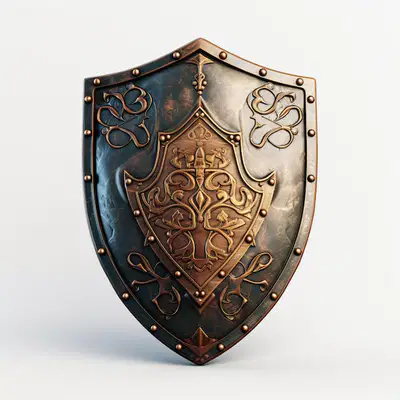
The Development of Feudalism in Western Europe
Mr. McNeil
Week of 4/22/2024
2
Essential Question
How well did feudalism establish order in Europe in the Middle Ages?
Objectives
In the course of reading this lesson and participating in the classroom activity, students will
• describe the accomplishments of Charlemagne and explain how his cooperation with the pope benefited both the emperor and the pope.
• identify the key problems faced by Europeans that the development of feudalism addressed.
• differentiate between the roles and responsibilities of four of the main social classes in medieval European society.
• evaluate the extent to which feudalism brought security, economic stability, prosperity, and opportunity to Europe in the Middle Ages.
3
Multiple Choice
Feudalism only had an effect on Europe and no place else?
True
False
4
Lesson 2 Vocabulary
Process
Reign
Serf
Survive
Charlemagne
Chivalry
Christianity
Feudalism
Fief
Function
Maintain
5
After the Fall of Rome
When Rome fell to invading barbarians in 476 C.E., Europe was left with no central government or system of defense.
The most powerful rulers were those who controlled the most land and had the greatest warriors.
One powerful group during this time was the Franks (from whom modern-day France takes its name).
6
Multiple Choice
Who were the most powerful groups of people after the Fall of Rome?
The Turks
The French
The Franks
The Romans
7
Who is Charlemagne?
Name also means "Charles the Great"
Charlemagne ruled for over 40 years from the year 768 C.E. to 814 C.E.
Charlemagne worked with Pope Leo III and the two were able to establish the Roman Catholic Church
After Charlemagne's death in 814 C.E., his empire quickly began to fall apart.
8
--> needed to have a good deal of wealth, since a full suit of armor and a horse cost a small fortune
Monarchs
Nobles
Vassals & Knights
Peasants & Serfs
-->ruled the land and made all important decisions
-->could not leave the lord's land that they worked on without permission
--> received land from Kings/Queens in exchange for loyalty and service
System
of
Feudalism
9
Monarchs during Feudal Times --- Page 21 in the Textbook
Monarchs included Kings & Queens as well as feudal lords
They were expected to keep order and to provide protection for their vassals of the land
Monarchs had to work hard to maintain control of their kingdoms, and even a few of them had enough wealth to keep their own armies
The power/control that monarchs had seemed to grow during the Middle Ages and they were viewed as being strong individuals
10
Fill in the Blanks
Type answer...
11
Multiple Choice
Another name for Kings and Queens was?
Franks
Dictator
Monarch
Barbarian
12
Fill in the Blanks
Type answer...
13
Lords and Ladies during Feudal Times --- Page 22-23 in the Textbook
Most lords & ladies lived on manors (some lords had 1 manor while others had several)
Lords acted as judges in manor courts and had the power to give people fines and punish individuals who broke the law
Only men were apart of the feudal relationship between lords and vassals
Noblewomen (Ladies) were responsible for raising their own children and most times the children of other noble families
14
Multiple Choice
Most lords and ladies lived in what type of houses?
Castles
Manors
Townhomes
Cabins
15
Multiple Choice
Lords acted as ______ in manor courts and had the power to give people fines and punish individuals who broke the law.
Monarchs
Royalty
Judges
Serfs
16
Fill in the Blanks
Type answer...
17
Knights during Feudal Times --- Page 24 in the Textbook
The 3 stages of becoming a Knight were Page (Stage 1), Squire (Stage 2), & Warrior/Knight/Soldier (Stage 3)
Knights followed a code of behavior which was called chivalry
Knights were expected to be loyal to the church and their lord while protecting the helpless
A knight's life consisted of jousts and tournaments where knights would fight while wearing heavy suits of armor (armor was called chain mail)
18
Fill in the Blanks
Type answer...
19
Fill in the Blanks
Type answer...
20
Open Ended
Using information from the text describe the three basic stages for a boy to become a knight.
21
Peasants/Serfs during Feudal Times --- Page 26-27 in the Textbook
Peasants were classified as being either free or unfree
Free peasants could rent land to farm while paying rent to lords; Unfree peasants would farm the lord's fields and could not leave the lord's manor
Peasants were responsible for raising crops and tending to livestock but every manor also had carpenters, shoemakers, metalworkers and other skilled workers
Peasant women would not only work in the fields but were also responsible for caring for their children, their own homes and their own livestock.
22
Multiple Select
Peasants were classified ....
Knights in training
Free
Monarchs in training
Unfree
23
Open Ended
Using the text please describe a typical day in the life of a peasant.
24
Multiple Select
What groups threatened Western Europe?
Muslims
Spaniards
Magyars
Vikings
25
Open Ended
Based off the answers to the last question ... why did each of 3 groups threaten Western Europe?
26
Feudalism Project
You will now continue to work on your coat of arms project as well as your story. Remember this project is due this Friday April 26, 2024
The Development of Feudalism in Western Europe
Mr. McNeil
Week of 4/22/2024
Show answer
Auto Play
Slide 1 / 26
SLIDE
Similar Resources on Wayground

21 questions
Africa
Presentation
•
7th - 8th Grade
19 questions
Africa History Remediation H1bc
Presentation
•
7th Grade
20 questions
Compromise and the Constitution
Presentation
•
7th Grade
20 questions
Foundations of Government
Presentation
•
6th - 8th Grade
20 questions
Geography and the Early Settlement of China
Presentation
•
6th Grade
22 questions
Cattle trails and drives
Presentation
•
7th Grade
18 questions
Gutenberg & Printing Press
Presentation
•
7th Grade
21 questions
JTA - Misconception vs. Fact
Presentation
•
7th Grade
Popular Resources on Wayground
20 questions
Math Review

Quiz
•
3rd Grade
15 questions
Fast food
Quiz
•
7th Grade
20 questions
Context Clues
Quiz
•
6th Grade
20 questions
Inferences
Quiz
•
4th Grade
19 questions
Classifying Quadrilaterals
Quiz
•
3rd Grade
20 questions
Figurative Language Review
Quiz
•
6th Grade
20 questions
Equivalent Fractions
Quiz
•
3rd Grade
10 questions
Identify Fractions, Mixed Numbers & Improper Fractions
Quiz
•
3rd - 4th Grade
Discover more resources for Social Studies
56 questions
Civics & Econ Practice SOL #1
Quiz
•
6th - 8th Grade
35 questions
7th ELA 4th 9wks Final
Quiz
•
7th Grade
35 questions
Civics EOC Review: Category 1
Quiz
•
7th Grade
50 questions
TCI 7 Semester 2 Exam Quiz
Quiz
•
7th Grade
56 questions
Civics & Econ Practice SOL #1
Quiz
•
6th - 8th Grade
29 questions
7th Grade: Spring Semester Final Exam Review
Quiz
•
7th Grade
20 questions
The United States 1800s-1900s
Quiz
•
6th - 8th Grade
6 questions
Texas History Timeline Questions

Interactive video
•
7th Grade