Search Header Logo
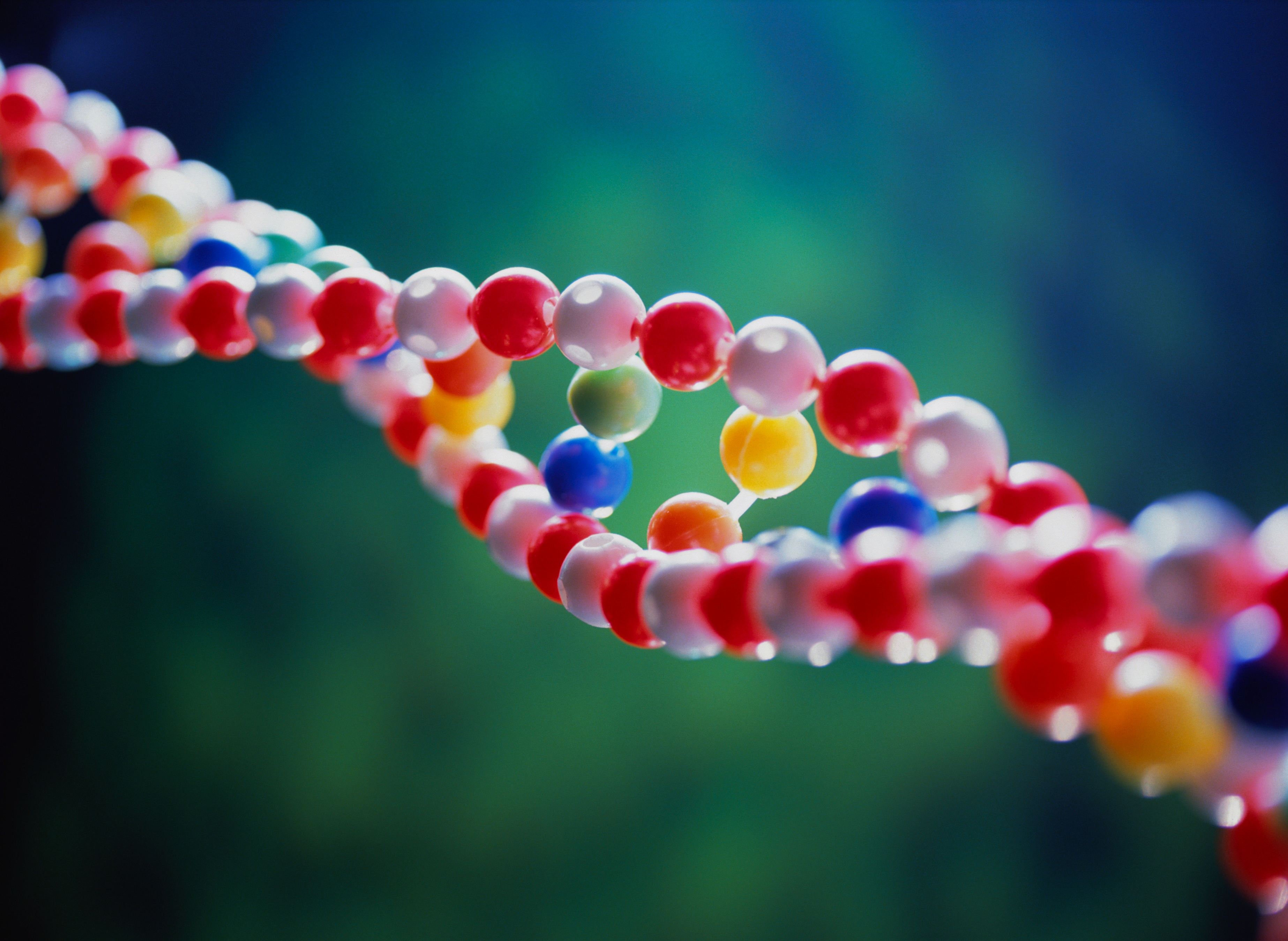
Unraveling the Genetic Code

Unraveling the Genetic Code

Assessment

Presentation

•

Science

•

7th Grade

•

Easy

•
NGSS
HS-LS1-4, MS-ESS1-1, HS-ESS3-1

+18

Standards-aligned

Created by

Jason Casner

Used 4+ times

FREE Resource

9 Slides • 41 Questions

1

Unraveling the Genetic Code

Understanding the fundamental building blocks of life through decoding the genetic information encoded in DNA.

2

Multiple Choice

The goal of mitosis is to

1

make a new parent cell

2

make two new daughter cells with the same DNA

3

make two new daughter cells with different DNA

4

to grow a larger toe

3

Multiple Choice

In interphase, the cell is

1

multiplying chromosomes

2

growing and copying DNA

3

destroying DNA

4

moving inside

4

Multiple Choice

A good way to remember the stages of cell division is:

1

AMPT

2

ATMP

3

PMAT

4

PMA

5

Multiple Choice

Which is NOT a phase of the cell cycle?

1

Mitosis

2

Duplication

3

Cytokinesis

4

Interphase

6

Multiple Choice

Question image

Place the pictures in the correct order.

1

A, B, C, D, E

2

B, E, D, A, C

3

C, E, A, D, B

4

B, D, A, E, C

7

Multiple Choice

Prokaryotic cells divide through a process known as ______________.

1

Anphase

2

Cytokinesis

3

Binary Fission

4

G2 Phase

8

Unraveling the Genetic Code

Chromosomes are made of deoxyribonucleic acid (DNA), the material that determines inherited characteristics. DNA is composed of subunits called nucleotides, which consist of four bases: adenine (A), thymine (T), cytosine (C), and guanine (G). DNA must be able to be copied because it carries the instructions for building and maintaining an organism. Scientists were surprised by the versatility of DNA, as they initially underestimated its capabilities.

9

Multiple Choice

What nucleotide does guanine match up with?

1

Adenine

2

Thymine

3

Cytosine

4

Guanine

10

Cytosine Subunits

Cytosine is one of the four subunits of DNA. It pairs with Guanine to form the DNA double helix. The other two subunits are Adenine and Thymine. Together, these subunits make up the genetic code that determines our traits and characteristics. DNA is the blueprint of life!

11

Unraveling the Genetic Code

A nucleotide is made up of three things: a phosphate group, a sugar molecule (deoxyribose), and a nitrogenous base (adenine, thymine, cytosine, or guanine). According to Chargaff's rules, the amount of adenine always equals the amount of thymine, and the amount of guanine always equals the amount of cytosine. Rosalind Franklin used X-ray crystallography to make images of DNA molecules. Franklin's images revealed that DNA has a double helix structure.

12

Multiple Choice

What are the three components of a nucleotide?

1

A. Phosphate group, sugar molecule (deoxyribose), and nitrogenous base (adenine, thymine, cytosine, or guanine)

2

B. Phosphate group, sugar molecule (ribose), and nitrogenous base (adenine, uracil, cytosine, or guanine)

3

C. Phosphate group, sugar molecule (deoxyribose), and nitrogenous base (adenine, uracil, cytosine, or guanine)

4

D. Phosphate group, sugar molecule (ribose), and nitrogenous base (adenine, thymine, cytosine, or guanine)

13

Nucleotide Components

A nucleotide consists of three components: a phosphate group, a sugar molecule (deoxyribose), and a nitrogenous base (adenine, thymine, cytosine, or guanine). These components are the building blocks of DNA and RNA, carrying genetic information and playing a crucial role in cellular processes.

14

Unraveling the Genetic Code

  • James Watson and Francis Crick's model of DNA: Double helix structure
  • Two things explained by the model: DNA's double structure and the molecules forming the sides and rungs of the ladder
  • Twisted ladder shape of DNA: Helix
  • Sides of the ladder: Molecules
  • Rungs of the DNA ladder: DNA bases
  • Adenine: Pairs with thymine
  • Thymine: Pairs with adenine

15

Multiple Choice

What did James Watson and Francis Crick's model of DNA explain?

1

DNA's double structure and the molecules forming the sides and rungs of the ladder

2

The twisted ladder shape of DNA

3

The molecules forming the sides of the ladder

4

The DNA bases forming the rungs of the ladder

16

The Twisted Ladder

Trivia: James Watson and Francis Crick's model of DNA explained the twisted ladder shape of DNA. This groundbreaking discovery revolutionized our understanding of genetics and paved the way for advancements in molecular biology. The model revealed how the molecules forming the sides and the DNA bases forming the rungs of the ladder work together to store and transmit genetic information.

17

Double Helix Structure and Chargaff's Observations

The double helix structure of DNA matches Chargaff's observations by following base pairing rules. Adenine (A) always pairs with thymine (T), and cytosine (C) always pairs with guanine (G). This complementary base pairing allows for accurate replication of DNA during cell division.

18

Multiple Choice

What is the basis of accurate replication of DNA during cell division?

1

Adenine pairs with guanine and cytosine pairs with thymine

2

Adenine pairs with cytosine and guanine pairs with thymine

3

Adenine pairs with thymine and cytosine pairs with guanine

4

Adenine pairs with uracil and cytosine pairs with guanine

19

Base Pairing Rule

Trivia: The accurate replication of DNA during cell division is based on the base pairing rule. Adenine always pairs with thymine, and cytosine always pairs with guanine. This ensures that the genetic information is faithfully passed on to the next generation.

20

Multiple Choice

Adenine bonds with ______________.
1
Guanine
2
Thymine
3
Cytosine
4
Adenine

21

Multiple Choice

Guanine bonds with ______________.
1
Adenine
2
Guanine
3
Cytosine
4
Thymine

22

Multiple Choice

Which shows the correct complementary base pairing for DNA?
1
C-A, T-G
2
A-G, C-T
3
C-G, U-A
4
T-A, G-C

23

Multiple Choice

Which sequence of DNA bases would pair with this partial strand
ATG TGA CAG
1
ATG TGA CAG
2
TAC ACT GTC
3
GTA AGT GAC
4
CAT TCA CTG

24

Multiple Choice

Question image
What determines the code, or information, of a DNA molecule?
1
the shape (structure) of the nitrogen bases
2
the order (sequence) of the nitrogen bases
3
the color of the nitrogen bases
4
the frequency (number) of nitrogen bases

25

Multiple Choice

What does DNA stand for?
1
Deoxyribonucleic acid
2
Denitrogenous acid
3
Deribonucleic acid
4
Diribonucleic acid

26

Multiple Choice

Question image

how would you describe the shape of a DNA molecule?

1
double helix
2

a ladder

3

a strand tightly wound up around itself

4

a chain of amino acids

27

Multiple Choice

Which organelle is DNA usually found in?
1
cell membrane
2
vacuole
3
chloroplast
4
nucleus

28

Multiple Choice

What are the nucleotides made of?
1
Sugar, Phosphate, nitrogen base
2
Phosphate, Adenine, nitrogen base
3
Thymine, Adenine, Cytomine
4
Phosphate, Nitrogen, Adenine

29

Multiple Choice

Question image
Which of the following best describes a DNA molecule?
1
double helix
2
contains ribose
3
made of amino acids
4
contains Uracil

30

Multiple Choice

Question image
Why is DNA important?
1
it is very small and very complicated
2
it's in everything
3
it serves as the blueprint for traits of all living things
4
because we eat it every day for energy

31

Multiple Choice

What are the 4 nitrogen bases?
1
adenine, thymine, cytoplasm, and guanine
2
adenine, thymine cytosine, and guanine
3
adenine, thymine, cytosine, and gylcerol
4
adenine, thymine, cytosine, and glucose

32

Multiple Choice

Which sequence of DNA bases would pair with this partial strand
ATG TGA CAG
1
ATG TGA CAG
2
TAC ACT GTC
3
GTA AGT GAC
4
CAT TCA CTG

33

Multiple Choice

Which 2 molecules forms the sides (backbone) of the DNA ladder?
1
deoxyribose and adenine
2
deoxyribose and a hydrogen bond
3
sugar and the nucleus
4
deoxyribose (sugar) and phosphate

34

Multiple Choice

What does DNA stand for?
1
Deoxyribonucleic acid
2
Denitrogenous acid
3
Deribonucleic acid
4
Diribonucleic acid

35

Multiple Choice

How many chromosomes do human cells have?

1

46

2

23

3

2

4

44

36

Multiple Choice

Bundled up, organized DNA is called a

1

gene

2

trait

3

chromosome

4

nucleotide

37

Multiple Choice

Which sex has the chromosomes XY?

1

Female

2

Male

3

Cannot be determined.

38

Multiple Choice

What sex has the chromosomes XX?

1

Female

2

Male

3

Cannot be determined.

39

Multiple Choice

How many PAIRS of chromosomes are in a normal human body cell?

1

10 pairs

2

20 pairs

3

23 pairs

4

46 pairs

40

Multiple Choice

How much DNA is given to the children from each parent?

1

10%

2

25%

3

50%

4

75%

41

Multiple Choice

Question image

A doubled rod of condensed chromatin that contains DNA that carries genetic information:

1

Sister chromatids

2

Centromere

3

DNA

4

Chromosome

42

Multiple Choice

How many daughter cells are produced in mitosis?
1
1
2
2
3
4
4
6

43

Multiple Choice

Question image
1
Prophase
2
Interphase
3
Anaphase
4
Telophase

44

Multiple Choice

Question image
1
Anaphase
2
Cytokinesis
3
Telophase
4
Metaphase

45

Multiple Choice

Question image
1
Cytokinesis
2
Interphase
3
Anaphase
4
Metaphase

46

Multiple Choice

Question image
1
Anaphase
2
Cytonkinesis
3
Interphase
4
Prophase

47

Multiple Choice

Question image
1
Cytokinesis
2
Anaphase
3
Telophase
4
Prophase

48

Multiple Choice

Question image
In mitosis, the two resulting cells are
1
different from the starting cell and identical to each other.
2
different from the starting cell and different from each other.
3
identical to the starting cell and different from each other.
4
identical to the starting cell and identical to each other.

49

Multiple Choice

The process by which the nuclear material is divided equally between two new cells
1
mitosis
2
cancer
3
spindle
4
centromere

50

Multiple Choice

Question image
Which is Metaphase?
1
A
2
E
3
C
4
F

Unraveling the Genetic Code

Understanding the fundamental building blocks of life through decoding the genetic information encoded in DNA.

Show answer

Auto Play

Slide 1 / 50

SLIDE