
Evolution of Living Organisms
Presentation
•
Biology
•
9th - 12th Grade
•
Practice Problem
•
Medium
+3
Standards-aligned
Tanya Williams
Used 638+ times
FREE Resource
6 Slides • 9 Questions
1
Evolutionary Theory
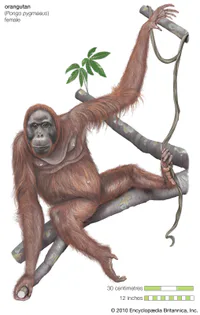
While you are waiting. What do you see? Explain Can you relate the image to evolution? How?
2
Poll
Did humans evolve from primates?
Yes, there is evidence that supports this claim.
No, I do not believe humans evolved from primates.
Maybe, humans did evolve from primates.
3
In your own words, use the images to explain the endosymbiotic theory, step by step.
____________________________________________________________________________________________________________________________________________________________________________________________________
4
Namste Tanya Williams
" A smart person is not smart. They are wise. That means they understand how to use their strengths and maximize their weaknesses. Yes, we all have weaknesses, but the difference is what we do with them.
Task 1: Work together in your study bear groups to organize the timeline correctly. (11) minutes
5
Poll
The study of science teaches us with evidence that the smallest basic unit of living organisms is the cell. They would say that the cell is the basic component of life that provides function for life. At first this life was simple just ordinary, but as we all know ordinary things need to become better, more self sufficient. This image examines the steps to that better (evolvment), or was there something greater? How do you feel about the subject?
Yes
No
Grey area
No comment
6
Evolution of Cells
anerobic cell
The belief is that some ____________ cells
evolved into an
______________ to make their own food.
therefore, some bacteria cells, evolved from anerobic to ___________.
7
Endosymbiotic Theory
According to endosymbiotic theory, an aerobic eukaryote may have engulfed a photosynthetic bacterium, such as a cyanobacterium, to form another symbiotic relationship. The photosynthetic bacterium would eventually evolve in chloroplast, possessing its own DNA. This new photosynthetic (autotrophic), eukaryotic cell would be an ancestor plant cells and autotrophic protists cells.
8
Multiple Choice
How are bacteria and mitochondria similar?
They both have membrane-bound organelles
They both contain chloroplast.
They both contain DNA but have no other membrane-bound organelles.
Both are anaerobic but can be either autotrophic or heerotrophic
9
Multiple Choice
Which of the following is an accurate definition of the theory of evolution?
gradual changes in organisms over time create new types of organisms
life is continually created from nonliving material
the diversity of life cannot be explained by descent from a common ancestor
geological processes are responsible for the origin of life.
10
Multiple Choice
According to the theory of endosymbiosis, how did plant cells evolve?
An anerobic cell engulfed a chloroplast
an aerobic, eukaryotic cell engulfed a photosynthetic bacterium
an anaerobic cell engulfed a small aerobic bacterium
an aerobic bacterium engulfed an anaerobic bacterium
11
Evolution of Cells
anerobic cell
The belief is that some ____________ cells
evolved into an
______________ to make their own food.
therefore, some bacteria cells, evolved from anerobic to ___________.
12
Multiple Choice
In 1953, Harold Urey and Stanley Miller performed a landmark experiment intended to mimic the primordial conditions. Electric sparks (simulating lightning) were passed through a chemical solution of methane, ammonia, hydrogen, and water, which resulted in the formation of ________, the building blocks of life. The answer is amino acids. Select the correlating box of learning.
chemical (nonliving) evolution
organic (living) evolution
13
Multiple Select
Select the two statements, that defend evidence of chemical (nonliving) evolution.
results in change to a species
occurs as a result of changes to a molecular structure, large compounds that are broken down into simpler ones
the first type of evolution that occurred
involves cellular changes, and to RNA to DNA
14
Multiple Select
Select the statements, that defend evidence of organic (living) evolution.
happens over a long period of time
involves cellular changes, and changes to RNA and DNA
results in changes to species
occurs as a result of changes to molecular structure, large compounds broken down simpler ones
15
Poll
Do you agree that evolution is a common factor of the living (organic) and nonliving (chemical) or is or was there a higher underlying phenomenon that cannot be explained, only gifted?
Agree
(Organic and Chemical)
Disagree
(his hand)
No comment
Gray Matters
Evolutionary Theory
While you are waiting. What do you see? Explain Can you relate the image to evolution? How?
Show answer
Auto Play
Slide 1 / 15
SLIDE

Similar Resources on Wayground
11 questions
Quadrilaterals
Presentation
•
9th - 12th Grade
11 questions
Factoring: Quadratic Trinomial when a=1
Presentation
•
9th - 12th Grade
12 questions
Medical Math- Military Time
Presentation
•
9th - 12th Grade
13 questions
Ecological Succession
Presentation
•
9th - 12th Grade
14 questions
Mutations
Presentation
•
9th - 12th Grade
9 questions
3.3 Energy Flow in Ecosystems
Presentation
•
9th - 11th Grade
11 questions
What is ATP? Recap- Amoeba Sisters
Presentation
•
9th - 12th Grade
10 questions
Absolute Value Equations
Presentation
•
9th - 12th Grade
Popular Resources on Wayground
10 questions
Fire Safety Quiz
Quiz
•
12th Grade
20 questions
Equivalent Fractions
Quiz
•
3rd Grade
20 questions
Main Idea and Details
Quiz
•
5th Grade
20 questions
Context Clues
Quiz
•
6th Grade
20 questions
Inferences
Quiz
•
4th Grade
36 questions
6th Grade Math STAAR Review
Quiz
•
6th Grade
19 questions
Classifying Quadrilaterals
Quiz
•
3rd Grade
12 questions
What makes Nebraska's government unique?
Quiz
•
4th - 5th Grade
Discover more resources for Biology
24 questions
BIOLOGY STAAR REVIEW
Quiz
•
9th Grade
30 questions
Biology STAAR Review #3
Quiz
•
9th Grade
16 questions
AP Biology: Unit 1 Review (CED)
Quiz
•
9th - 12th Grade
50 questions
Biology EOC Review
Quiz
•
9th Grade
20 questions
Cladogram Practice
Quiz
•
10th Grade
25 questions
photosynthesis and cellular respiration
Quiz
•
9th Grade
20 questions
AP Biology: Unit 3 Review (CED)
Quiz
•
9th - 12th Grade
20 questions
Food Chains and Food Webs
Quiz
•
7th - 12th Grade