Search Header Logo
  1. Resource Library
  2. Science
  3. Earth & Space Science
  4. Hydrologic Cycle
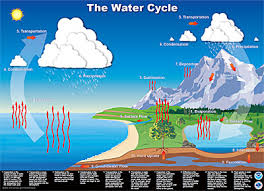
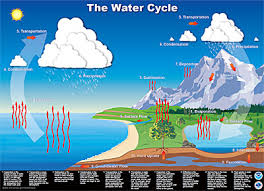
  5. The Hydrologic/water Cycle Lesson
The Hydrologic/Water Cycle Lesson

The Hydrologic/Water Cycle Lesson

Assessment

Presentation

•

Science

•

6th - 8th Grade

•

Medium

•
NGSS
MS-ESS2-4, MS-PS1-4, MS-ESS1-1

+8

Standards-aligned

Created by

Robert Johnson

Used 64+ times

FREE Resource

3 Slides • 23 Questions

1

2

Categorize

Options (20)

water penetrates the earth's surface

water seeps into the soil

water percolates through the ground

water soaks into the ground

water filters into the earth

water vapor turns into liquid water
water vapor changes into liquid form
water vapor cools and becomes liquid
water vapor condenses into liquid
water vapor transforms into liquid droplets

water turns into vapor

water changes into gas

water evaporates into the air

water transforms into steam

water rises as vapor

rain falls from the sky

snowflakes descend from the clouds

hail drops from the atmosphere

sleet comes down as frozen rain

drizzle descends lightly from the clouds

Organize these options into the right categories

Condensation
Evaporation
Precipitation
infiltration

3

Match

Match the following

runoff

transpiration

evapotranspiration

precipitation

condensation

water flowing over land surfaces

loss of water from plant leaves

combination of evaporation and transpiration

water falling from the sky

conversion of water vapor to liquid

4

Multiple Choice

Question image
Which stages does liquid water from the ocean turn into water vapor?
1
condesantion
2
evaporation
3
precipitation
4
run off

5

Multiple Choice

Question image
Which stage does ground water try to return to the ocean or soak into the ground?
1
condensation
2
evaporation
3
precipitation
4
run off

6

Multiple Choice

Question image
What is C?
1
Evaporation
2
Condensation
3
Precipitation
4
Runoff

7

Multiple Choice

Question image
What is      D?
1
Evaporation
2
Condensation
3
Precipitation
4
Runoff

8

Multiple Choice

Snow, sleet, hail, and rain are all examples of  ________________. 
1
evaporation
2
condensation
3
accumulation
4
precipitation

9

Multiple Choice

How much of the earth's water is freshwater?
1
50 %
2
3 %
3
97 %
4
93 %

10

Multiple Choice

Question image
Which reservoir in the water cycle contains the most water?
1
Ice Caps
2
Lakes
3
Groundwater
4
Oceans

11

Multiple Choice

The hydrologic cycle is a continuous process driven by energy from the ...
1
Moon.
2
Sun.
3
gravity.
4
Earth's interior.

12

Multiple Choice

97% of the water on earth is _________, making it undrinkable for humans.
1
fresh water
2
ground water
3
salt water
4
surface water

13

Multiple Choice

The supply of freshwater under the Earth's surface.
1
watershed
2
mouth
3
headwaters
4
groundwater

14

Multiple Choice

Question image
What is it called when plants give off water vapor as a waste product?
1
condensation
2
evaporation
3
sublimation
4
transpiration

15

Multiple Choice

____________________ is the process by which water on the ground surface enters the soil. ________________ rate in soil science is a measure of the rate at which soil is able to absorb rainfall or irrigation.

1

Infiltration

2

Percolation

3

Deposition

4

Condensation

16

17

Multiple Choice

Change from Gas to Solid is called........
1
Sublimation
2
Deposition
3
Fusion
4
condensation

18

Multiple Choice

Sublimation is
1
when solid turns into gas
2
when gas turns into plasma
3
when liquid turns into gas
4
when gas turns into solid

19

20

Multiple Choice

What happens to the speed and spacing of the particles in the dry ice during sublimation?

1

Faster, closer together

2

Faster, farther apart

3

Slower, closer together

4

Slower, farther apart

21

Multiple Choice

What is the phase change of a solid to a liquid?
1
freezing
2
melting
3
boiling
4
condensation

22

Multiple Choice

What is vaporization?
1
a liquid becoming a gas
2
a gas becoming a liquid
3
a liquid becoming a solid
4
a gas becoming a solid

23

Multiple Choice

________________ is a form of vaporization that takes place ONLY on the surface of a liquid.
1
evaporation
2
boiling
3
freezing
4
melting

24

Multiple Choice

The change from a gas to a liquid by cooling
1
condensation
2
evaporation
3
sublimation
4
deposition

25

Multiple Choice

Faster moving particles have more _____________ energy (heat)
1
free
2
thermal
3
potential
4
responsive

26

Multiple Choice

Question image
Both the melting point and __________ point occur at the same temperature.
1
condensation
2
boiling
3
freezing
4
sublimation

Show answer

Auto Play

Slide 1 / 26

SLIDE