Search Header Logo
  1. Resource Library
  2. Science
  3. Chemistry
  4. Phase Change
  5. Boiling And Freezing/ Melting Points
Boiling and Freezing/ Melting Points

Boiling and Freezing/ Melting Points

Assessment

Presentation

Science

4th - 5th Grade

Medium

NGSS
MS-PS1-4, 4-PS3-2, MS-PS3-4

+2

Standards-aligned

Created by

Kimberly Hamlin

Used 41+ times

FREE Resource

6 Slides • 22 Questions

1

Boiling and Freezing/ Melting Points

by Kimberly Hamlin

media

2

​Water

Because water is a liquid at room temperature, you can see liquid water all around you throughout the day. It takes more extreme temperatures than what is in our typical natural environment to see frozen water or boiling water.

There is a specific temperature at which water will freeze or melt and specific temperature at which water will boil.

media

3

Multiple Choice

When a liquid reaches the temperatures of its ___, it can become a gas.
1
melting point
2
freezing point
3
boiling point
4
density

4

Multiple Choice

When ice melts, it becomes a 
1
solid
2
liquid
3
gas
4
plasma

5

​Boiling Point of Water

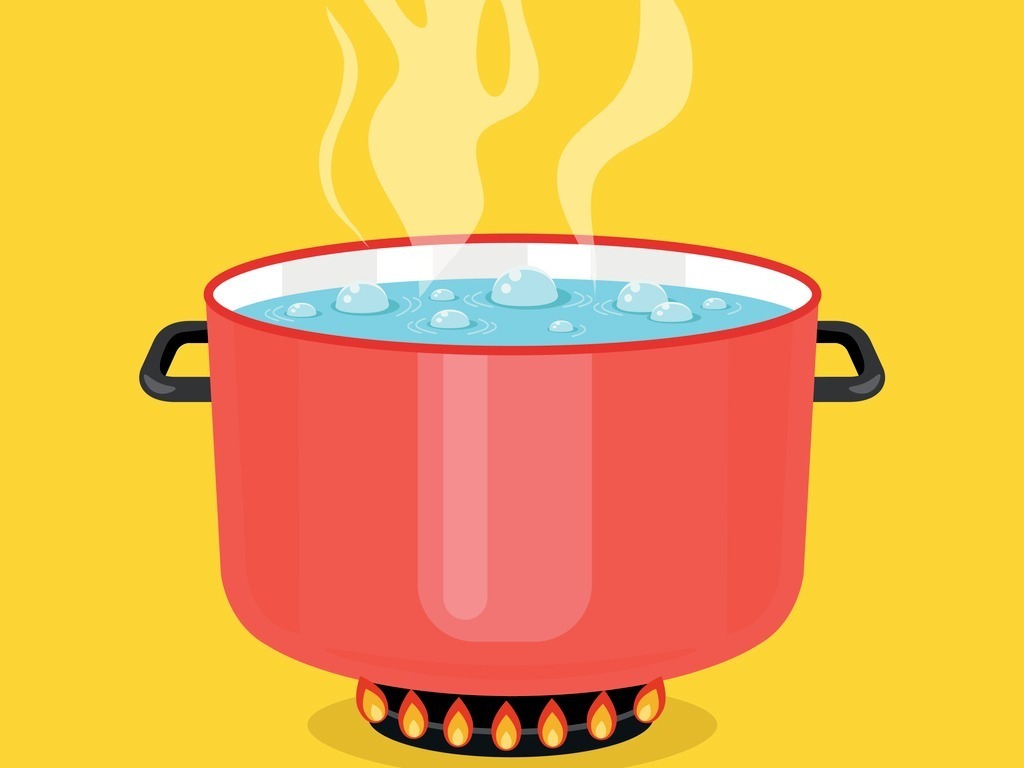
  • ​As water heats up, the molecules begin to move around and bubbles move from the bottom to the top. When the temperature of water reaches 100°C, the water will boil.

  • Boiling water has continuous bubbles that rise to the top quickly. Boiling water cause evaporation, which is when the water turns to gas and releases into the atmosphere.

  • Steam is the visible gas rising from the boiling water. The boiling point of water is 100°.

media

6

Multiple Choice

A student places a pan of water on a stove. What happens to some of the water as it is heated to a boil?
1
It gets destroyed.
2
It gets new atomic bonds
3
It becomes solid.
4
It becomes a gas.

7

Multiple Choice

What is the boiling point of water
1
0 C
2
100 F
3
50 C
4
100 C

8

​Freezing Point of Water

media

9

  • ​The freezing/ melting point of water is 0°C. Water both freezes and melts at 0°C because that is the border between water turning to ice and ice turning to liquid.​​

  • When the temperature of liquid water drops below 0°C, it turns to a solid. Water freezes when the molecules lose heat and slow down, locking into a set pattern as a solid state.

  • When ice warms up to 0°C, it begins to melt Ice melts when the molecules begin to move around and break out of their fixed pattern into a liquid state. 0°C is the temperature of ice water- half ice and half water.

10

media

11

Multiple Choice

Solid can change into a liquid when it's .......

1

cooled

2

burned

3

heated

4

freezed

12

Multiple Choice

The freezing point of water is...

1

100oC

2

0oC

3

-10oC

4

150oC

13

Multiple Choice

Melting is.....

1

A process where a gas changes into a solid.

2

A process where a liquid changes into solid.

3

A process where a solid changes into gas.

4

A process where a solid changes into a liquid.

14

Multiple Choice

Melting needs heat.

1

TRUE

2

FALSE

15

Multiple Select

Choose the pictures that show MELTING. (You may choose more than 1).

1
2
3
4

16

Multiple Choice

What is the boiling point of water

1

0 C

2

100 C

3

273 C

4

50 C

17

Multiple Choice

Question image

What is happening at the boiling point?

1

liquid to gas

2

solid to liquid

3

gas to liquid

4

liquid to solid

18

Multiple Choice

The teacher heats a pot of water. Once the water reaches 100°C, which point has the water reached?

1

Freezing

2

Boiling

3

Melting

4

Evaporation

19

Multiple Choice

Melting Point of ice is

1

100 degrees Celsius

2

0 degrees Celsius

3

0 degrees Fahrenheit

20

Multiple Choice

the change of state from a liquid to a gas
1
water cycle
2
evaporation
3
precipitation
4
condensation

21

Multiple Choice

Evaporation occurs when water changes into 
1
transpiration
2
snow
3
solid
4
vapor

22

Multiple Choice

When a liquid reaches the temperatures of its ___, it can become a gas.
1
melting point
2
freezing point
3
boiling point
4
density

23

Multiple Choice

Melting Point of ice is

1

100 degrees Celsius

2

0 degrees Celsius

3

0 degrees Fahrenheit

24

Multiple Choice

What is the boiling point of water
1
0 C
2
100 F
3
50 C
4
100 C

25

Fill in the Blank

to reach the boiling point and change from a liquid to a gas.

26

Fill in the Blank

becoming a gas or steam

27

Fill in the Blank

losing heat and becoming a solid from a liquid

28

Fill in the Blank

addition of heat causing matter to become a liquid from a solid

Boiling and Freezing/ Melting Points

by Kimberly Hamlin

media

Show answer

Auto Play

Slide 1 / 28

SLIDE