
Search Header Logo
Trade, WH/EES Standards Labs

Trade, WH/EES Standards Labs

Assessment

Presentation

Social Studies

9th Grade

Medium

Created by

Sayre Olson

Used 10+ times

FREE Resource

12 Slides • 14 Questions

1

Trade, WH/EES Standards Labs
Slide image

2

Welcome!! Before we get started today, here are some important things to know about Quizizz lessons.

  • In the lesson, we'll switch between reading and discussion & answering questions. The questions work the way that they do on a regular quizizz game.

  • There will be a combination of multiple choice, checkbox, fill in the blank, open response, and poll questions throughout the quizizz lessons that we'll do in Standards Labs.

3

Important Info (continued!)

  • Multiple choice questions, checkbox questions, and fill in the blank questions are graded immediately, so you'll see if you got it right.

  • Open response questions aren't graded immediately-- the teacher has to go in and look at your responses later. When you see your score at the end, it's going to make it seem like you got the open response questions wrong. Don't worry! They haven't been graded yet. As long as your response shows that you were paying attention and trying your best, you'll get full points.

  • Poll questions aren't graded-- they're just asking for your opinion.

4

Today's Learning Goal:

After today's lesson, scholars will be able to explain how nations trade with each other and how trade influences a country's economy, as well as relations between countries.

Slide image

5

Open Ended

In your own words, what is trade? Why do people, groups, or nations trade with one another?

6

What is Trade? (1/2)

Trade is the exchange of goods and services. Individuals, businesses and nations all participate in trade. The reason? Resources, including natural and man-made resources, are unevenly distributed across the Earth. No one country has all the resources it needs or wants, so they need to trade goods and services with others. People, businesses and countries specialize in certain goods and services that they have more skills and resources to produce. They trade with other countries for goods and services that others are better at producing.

7

What is Trade? (2/2)

An import is something a country brings in from another country. An export is something a country puts out to sell to other countries. Trade between countries has created a world of global economic interdependence. Because countries are interdependent, what happens to the economy in one country may affect many other countries.

8

Multiple Choice

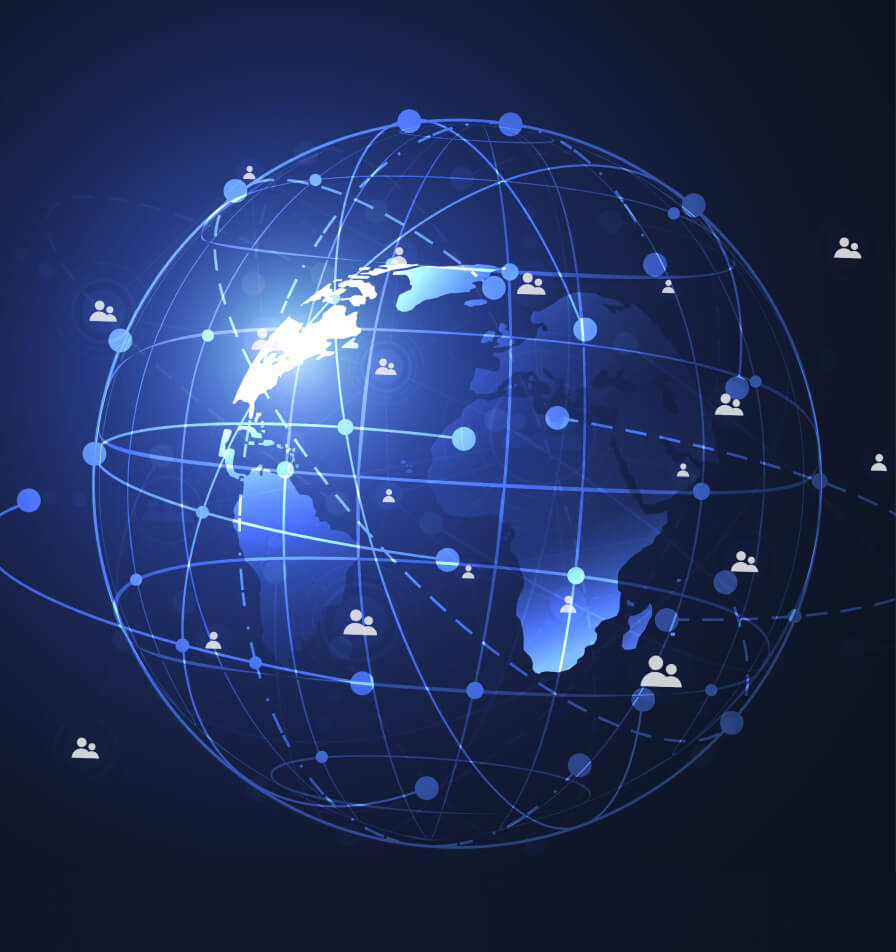
Which of the following best represents the global economy?

1

several dots all in a row

2

parallel lines that never cross

3

a square with four equal lines

4

a web of many interconnected lines

9

Multiple Choice

Trade is the exchange of goods and services. Which of these is an example of a service?

1

an iphone

2

Nike shoes

3

fixing your computer

4

a bike

10

Multiple Choice

Which of these is an example of a good?

1

babysitting

2

designer jeans

3

mowing the lawn

4

designing a building

11

Benefits of Trade

Voluntary trade results in both parties being better off than they were before. Richer, poorer, smaller, larger—everyone benefits from voluntary trade. That’s because no one voluntarily enters a trade unless they think they will gain something in return. For example, the US exports natural gas to many other countries in exchange for money. Because natural gas is not found everywhere, these countries value it very highly and are willing to pay a lot of money to get it. They would rather lose the money and gain the gas. Since natural gas is found in abundance in the US, it is less valuable to Americans, who would rather lose the gas and gain the money.

12

Multiple Choice

One of Japan’s top products is cars because Japanese automakers manufacture cars quickly and efficiently. However, the fuel needed to power those cars is not found in great amounts in Japan. Which of these is Japan more likely to bring in from another country: cars or fuel?

1

cars, because Japan produces them easily

2

fuel, because Japanese people do not need it

3

fuel, because it does not occur abundantly in Japan

4

cars, because Japanese car manufacturers are not efficient

13

Multiple Choice

What happens when two parties willingly trade with each other?

1

both parties disappear

2

both parties end up better than they were before

3

neither party ends up better than they were before

4

one party does well, but the other suffers

14

Trade Agreements

Trade between countries can be free or restricted. Free trade creates the most overall wealth around the world. Sometimes countries sign free trade agreements, which allow them to trade with each other with few barriers. For example, the North American Free Trade Agreement (NAFTA) was implemented in 1994 to reduce trade barriers between the US, Mexico and Canada. In 2018, the three countries signed a new trade deal to replace NAFTA. The new deal, called the United States-Mexico-Canada Agreement (USMCA), includes updates for automakers, labor standards and environmental practices.

15

Multiple Choice

A good brought in from another country is called a __________.

1

tariff

2

import

3

export

4

embargo

16

Multiple Choice

Free trade agreements always...

1

allow trade with the US

2

reduce barriers to trade

3

include standards for labor

4

decrease worldwide wealth

17

Trade Restrictions

Sometimes countries impose trade restrictions. These restrictions limit competition from other countries. One type of trade restriction is a tariff, also called an import tax. Tariffs raise the price of imported goods, making domestic goods the lower-priced option. They also generate revenue for the government. Quotas are another type of trade restriction. A quota is a limitation on the quantity of a product that may be imported. Quotas reduce the supply of imported goods, indirectly raising their prices. Again, the domestic product becomes the lower-priced alternative. Tariffs and quotas are used to encourage people to buy domestic products instead of foreign ones.

18

Multiple Choice

Why might a country want to restrict trade with other countries?

1

to shrink its economy

2

to encourage free trade

3

to increase spending on imports

4

to make domestic products seem more attractive

19

Multiple Choice

How do tariffs and quotas encourage people to buy domestic products?

1

by generating revenue for the government

2

by making imported products more expensive

3

by raising the prices of domestic goods and services

4

by destroying foreign products before people can buy them

20

Trade Embargos

Another type of trade restriction is an embargo. An embargo is a ban on the trade of specified goods with a specified country. It is used as a political tool to persuade the embargoed country to change particular actions or policies. These policies include human rights violations and support of terrorists. Countries that have been or remain under US embargo include Iran, Cuba, Sudan, Syria and North Korea.

21

Multiple Choice

Why are embargoes political tools?

1

They occur every four years as part of political campaigns

2

They pit small countries against larger ones in a global trade war

3

They are intended to persuade countries to change harmful policies

4

They enforce trade restrictions in wealthy countries around the world

22

Multiple Choice

Why did the U.S. place an embargo on trading goods with Cuba?

1

to help develop Cuba's goods and services

2

to show support for the Cuban government

3

to increase travel and trade between the two countries

4

to encourage the Cuban government to change some of their policies

23

Today's Learning Goal:

After today's lesson, scholars will be able to explain how nations trade with each other and how trade influences a country's economy, as well as relations between countries.

Slide image

24

Poll

Which of the following best describes how you feel about today's learning goal?

I'm still confused about what we learned today

I understand some of what we learned today

I understand all of what we learned today

I'm an expert on what we learned today & I could teach the next lesson on this

25

Open Ended

In your own words, explain what 9th grade scholars need to know about trade between nations.

26

Reminder!!

After this lesson is officially over, Quizizz will show you your score. The score is going to look lower than it actually is, because the open response questions aren't graded yet. So don't worry when you see it, as long as you tried your best!

Trade, WH/EES Standards Labs

Slide image

Show answer

Auto Play

Slide 1 / 26

SLIDE
