
- Resource Library
- Science
- Earth & Space Science
- Planets
- Comparing/contrasting The Planets Based On Size, Etc.

Comparing/contrasting the planets based on size, etc.

Presentation
•
Science
•
6th Grade
•
Medium
Standards-aligned

Emily Rios-Hernandez
Used 34+ times
FREE Resource
8 Slides • 20 Questions
1
Comparing/contrasting the planets based on size, surface, &atmospheric conditions

2
Multiple Choice
3
The Planets of our Solar System
We have 8 planets in our Solar System. Mercury, Venus, Earth, Mars, Jupiter, Neptune, and Uranus. Each planet is so unique in its own way, but some planets have lots of characteristics that they share. Today, we will talk about the two categories (groups)that make up our planets, as well as comparing Earth with the other planets, in regards to size, their surface, and their atmospheric condition.

4
5
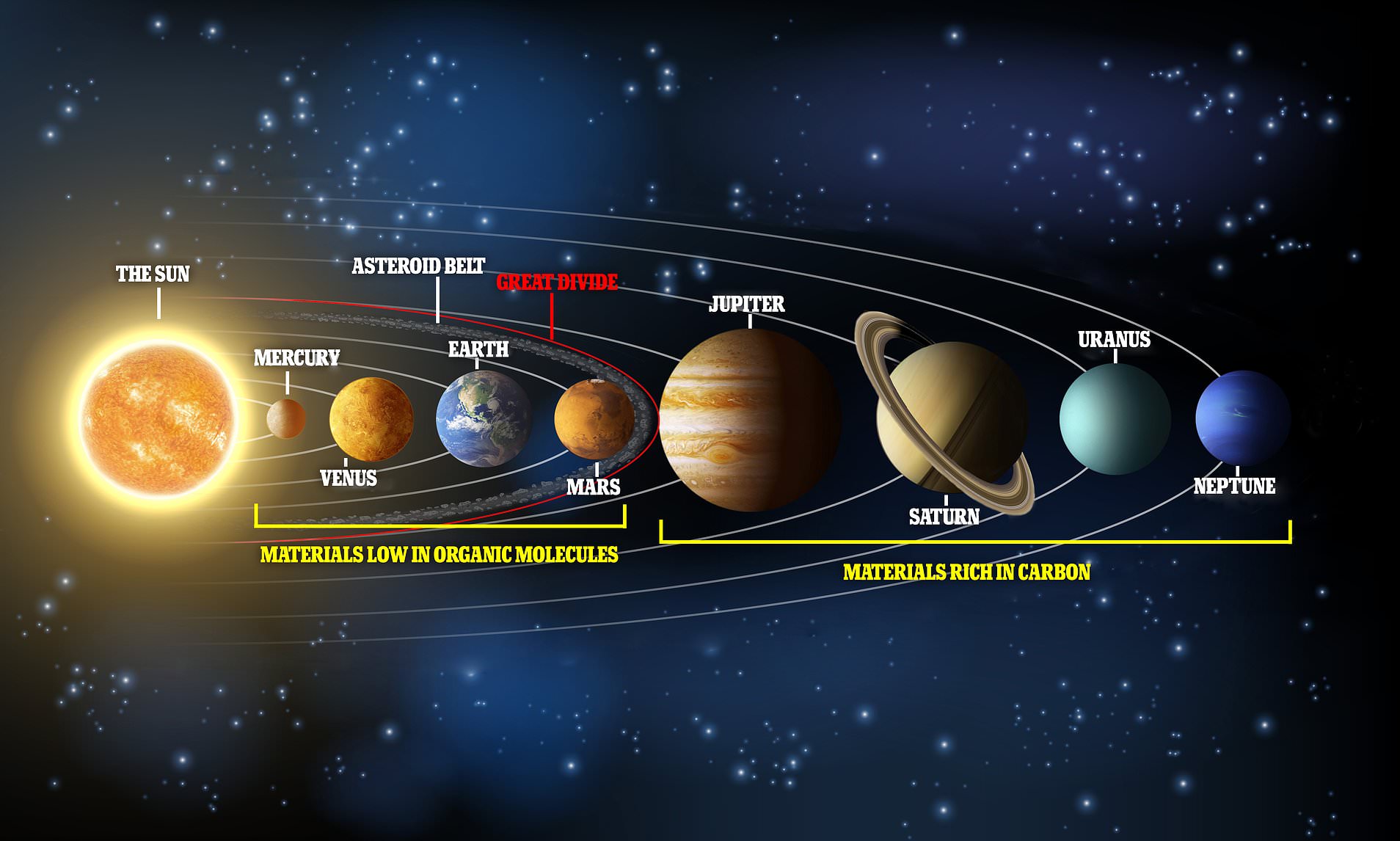
There are 2 planet categories in our Solar System: Inner Planets vs Our Planets
Inner planets are also known as the "terrestrial planets" are the 4 planets closest to the Sun: Mercury, Venus, Earth, and Mars
Outer planets are also known as the "Gas Planets" are the 4 planets away from the Sun: Jupiter, Saturn, Uranus, Neptune
These categories are also separated by the Asteroid Belt.
6
Multiple Choice

Gas giants
7
Multiple Choice

Terrestrial planets
8
Multiple Choice

9
Multiple Select
10
Multiple Select
11
The inner planets have lots of similar characteristics.
They are relatively small compared to the Gas planets.
They are warmer planets.
They all have rocky, solid surfaces.
Since they have a solid surface, even though they are the smallest planets, they are the most dense.
When it comes to atmospheric conditions, all planets have unique conditions. Below describes the inner planet's atmospheric conditions:
-Mercury: No Atmosphere (Too close to the sun)
-Venus: Atmosphere is mostly made up of CO2 (Venus is also the hottest surface planet)
-Earth: Contains mainly of Nitrogen (78%) and Oxygen (21%) (Only planet known to support life)
-Mars: Very thin atmosphere, mostly CO2

12
13
Multiple Select
14
Multiple Choice
15
Multiple Choice
16
Multiple Choice
17
Multiple Choice
18
Multiple Choice
19
The outer planets have lots of similar characteristics.
They are relatively large compared to the Rocky, inner planets.
They are colder planets
They all have gaseous surfaces. (You will not be able to stand on these planets)
Since they have a gaseous surface, even though they are the largest planets, they are the least dense.
When it comes to atmospheric conditions, all planets have unique conditions. Below describes the outer planet's atmospheric conditions:
-Jupiter: mostly Hydrogen (H2) and Helium (He)
-Saturn: mostly Hydrogen (H2) and Helium (He)
-Uranus: mostly Hydrogen (H2), Helium (He), and Methane (CH4)
-Neptune: Methane (CH4)
*You do not need to remember the different atmospheric conditions.

20
21
Multiple Choice
22
Multiple Choice
23
Multiple Choice
24
Multiple Choice
25
Multiple Choice
26
Multiple Choice
27
Multiple Choice

Based on the chart, which group of planets is denser?
28
Poll
Comparing/contrasting the planets based on size, surface, &atmospheric conditions
Show answer
Auto Play
Slide 1 / 28
SLIDE
Similar Resources on Wayground

20 questions
Force, Work and Energy
Lesson
•
5th - 6th Grade
20 questions
Nervous & Circulatory System
Lesson
•
5th - 6th Grade
22 questions
Taxonomy - Domains and Kingdoms Notes
Lesson
•
6th Grade
22 questions
Physical and Chemical Weathering
Lesson
•
6th Grade
20 questions
Fossil Fuels
Lesson
•
6th Grade
20 questions
Earth's Changing Climate
Lesson
•
6th Grade
19 questions
Energy Transfer and the Water Cycle
Lesson
•
6th Grade
22 questions
Compounds
Lesson
•
5th - 6th Grade
Popular Resources on Wayground
15 questions
Fractions on a Number Line

Quiz
•
3rd Grade
20 questions
Equivalent Fractions
Quiz
•
3rd Grade
25 questions
Multiplication Facts
Quiz
•
5th Grade
29 questions
Alg. 1 Section 5.1 Coordinate Plane
Quiz
•
9th Grade
22 questions
fractions
Quiz
•
3rd Grade
11 questions
FOREST Effective communication
Lesson
•
KG
20 questions
Main Idea and Details
Quiz
•
5th Grade
20 questions
Context Clues
Quiz
•
6th Grade
Discover more resources for Science
20 questions
Rocks and The Rock Cycle
Quiz
•
6th Grade
15 questions
Rock Cycle
Quiz
•
6th Grade
10 questions
Exploring the Rock Cycle

Interactive video
•
6th - 8th Grade
20 questions
Waves and Wave Properties
Quiz
•
6th - 8th Grade
10 questions
Understand Ecosystem Roles and Energy Flow
Interactive video
•
6th - 8th Grade
20 questions
Thermal Energy - Heat Transfer
Quiz
•
6th Grade
10 questions
Exploring the Rock Cycle: Types and Formation
Interactive video
•
6th - 8th Grade
22 questions
Layers of the Atmosphere
Quiz
•
6th Grade