


Vibrations and Sound Revision
Presentation
•
Physics
•
11th - 12th Grade
•
Practice Problem
•
Medium
Naoise Gallagher
Used 2+ times
FREE Resource
20 Slides • 16 Questions
1
Vibrations and Sound Revision
2
1. The Wave Nature of Sound
3
Multiple Choice
Sound waves need a medium to vibrate through. These types of waves are called...
Mechanical Waves
Electromagnetic Waves
4
Multiple Choice
Sound waves can undergo all the following wave phenomena except one. Which one is it?
Reflection
Refraction
Interference
Polarisation
Diffraction
5
6
7
8
Open Ended
Why does light not diffract when passing through a doorway but sound does?
9
10
Multiple Choice
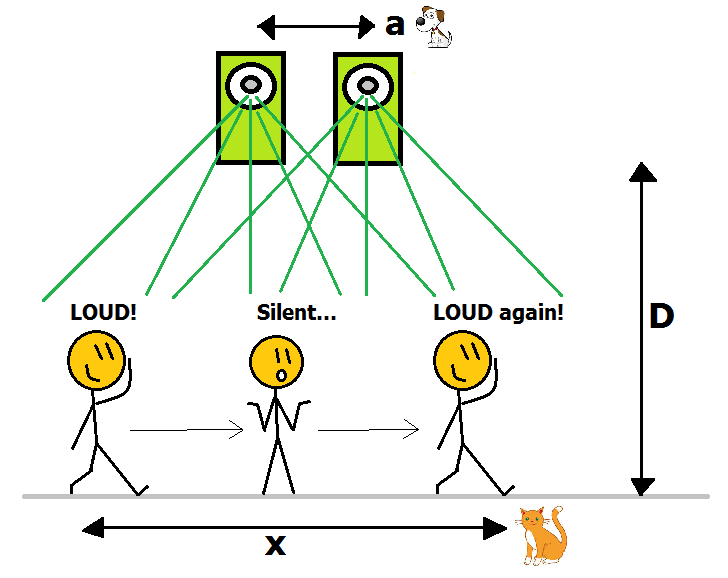
The sound from the speakers is loud but as the person continues walking it becomes silent due to ______________.
Constructive interference
Destructive interference
11
Multiple Choice
As the person continues walking the sound goes from quiet to loud again, this is due to ______________.
Constructive interference
Destructive interference
12
13
Multiple Choice
True or False: Sound Travels faster in denser mediums?
True
False
14
2. Characteristics of Notes
15
Multiple Select
Musical Notes Have 3 Main Characteristics, What Are They?
Pitch
Loudness
Tone
Quality
Depth
16
Loudness
Depends on the amplitude of the sound wave
If the amplitude is increased, the loudness of the sound increases.
17
Multiple Choice
Which number represents the amplitude of the wave in the diagram?
1
2
3
4
18
Pitch
• Depends on the frequency of the sound wave.
• As the frequency increases, the pitch of the sound becomes higher.
19
Multiple Choice
Which wave has the lowest pitch?
Wave 1
Wave 2
Wave 3
Wave 4
20
Multiple Choice
Which wave has the highest pitch?
Wave 1
Wave 2
Wave 3
Wave 4
21
Multiple Choice
Which wave is louder? Wave 1 or Wave 2?
Wave 1
Wave 2
22
Multiple Choice
True or False: Wave 1 and Wave 2 have the same pitch?
True
False
23
24
25
Quality
• Depends on the number of overtones and the relative strength of those overtones.
26
Open Ended
What are the frequency limits of audibility?
27
3. Resonance
28
Natural Frequency
Natural Frequency is the frequency an object will vibrate at if free to do so
29
Multiple Choice
What is resonance?
The transfer of energy so that a body vibrates at its natural frequency
The removal of energy from a wave to another wave
Constructive interference of waves
30
31
4. Vibrations in Strings and Pipes
32
Multiple Choice
The distance between two consecutive nodes in a standing wave is _____________.
One full wavelength
Half a wavelength
A quarter of a wavelength
A third of a wavelength
33
Multiple Choice
The distance between a node and an antinode in a standing wave is _____________.
One full wavelength
Half a wavelength
A quarter of a wavelength
A third of a wavelength
34
Fundamental Frequency of a Stretched String
A string vibrating with an antinode in the centre and a node at each end (with no additional nodes or antinodes present) is vibrating at its fundamental frequency
35
Fundamental Frequency (First Harmonic)
First Overtone (Second Harmonic)
Second Overtone (Third Harmonic)
36
Relationship Between Frequency (f) and Length (L)
Vibrations and Sound Revision

Show answer
Auto Play
Slide 1 / 36
SLIDE

Similar Resources on Wayground
32 questions
Measurement of Error
Lesson
•
KG - University
26 questions
Newton's Second Law
Lesson
•
11th Grade
28 questions
Sound Intensity and Resonance
Lesson
•
12th Grade
28 questions
History of the Periodic Table
Lesson
•
10th - 12th Grade
30 questions
Wave properties
Lesson
•
12th Grade
27 questions
Understanding Populations
Lesson
•
11th - 12th Grade
30 questions
Q1-L4-S2-Kinematics: Motion in 2D and 3D
Lesson
•
12th Grade
28 questions
Average Velocity
Lesson
•
11th Grade - University
Popular Resources on Wayground
10 questions
5.P.1.3 Distance/Time Graphs
Quiz
•
5th Grade
10 questions
Fire Drill
Quiz
•
2nd - 5th Grade
20 questions
Equivalent Fractions
Quiz
•
3rd Grade
15 questions
Hargrett House Quiz: Community & Service
Quiz
•
5th Grade
20 questions
Main Idea and Details
Quiz
•
5th Grade
20 questions
Context Clues
Quiz
•
6th Grade
20 questions
Inferences
Quiz
•
4th Grade
15 questions
Equivalent Fractions
Quiz
•
4th Grade