

Molecular Polarity

Presentation
•
Science
•
12th Grade
•
Practice Problem
•
Easy
+2
Standards-aligned

Salvador Magalong
Used 27+ times
FREE Resource
34 Slides • 26 Questions
1
Molecular Polarity
Synthesis Session

2
Poll
3
Poll
4
Poll
5
Poll
6
Poll
7
8
Open Ended
9
Synthesis Question 1:
What is a chemical bond?
an electrical attraction between the nuclei and valence electrons of an atom and which binds atoms together.

10
Open Ended
11
Types of Chemical Bonds
a. ionic – transfer of electrons
(metal and nonmetal )(cation and anion)

12
Types of Chemical Bonds
b. covalent – sharing of electrons (among nonmetals)

13
Types of Chemical Bonds
c. metallic – existing among metals

14
Open Ended
15
Non-polar covalent bond
• electrons are equally shared by the bonded atoms.
• balanced distribution of electrical charge
• electrons spend the same length of time in the locality of each atom

16
Polar covalent bond
• bonded atoms have an unequal sharing of electrons (partial electron transfer)

17
Multiple Choice
18
Multiple Choice
19
20
Dipole Moment
• the two partially charged regions or poles of a molecule are referred to as a dipole.
• symbolized by an arrowhead to the more electronegative atom (negative pole), and a crossed tail located at the less negative atom (positive pole)

21
Open Ended
22
Electronegativity
A measure of the tendency of an atom to attract electrons toward itself.

23
HOW TO DISTINGUISH A NONPOLAR FROM A POLAR COVALENT BOND?

24
25

For 5 minutes, answer the items above using your notebook and get ready with your answers in the next Quizizz Fill-in-the-blanks questions.
26
Fill in the Blank
27
Multiple Choice
28
Multiple Choice
29
Fill in the Blank
30
Multiple Choice
31
Multiple Choice
32
Fill in the Blank
33
Multiple Choice
34
Multiple Choice
35
36
MOLECULAR GEOMETRY and POLARITY
• The polarity of an atom-atom bond may be different from the polarity of the whole molecule itself.

37
MOLECULAR GEOMETRY and POLARITY
•The difference in the electron density of each atom makes EACH Be-H bond POLAR.
• However, since the molecular geometry of BeH2 is LINEAR and the two poles are on the OPPOSITE SIDES, the polarities “CANCEL OUT”, which makes the whole molecule NONPOLAR. (NO DIPOLE MOMENT!)

38
39
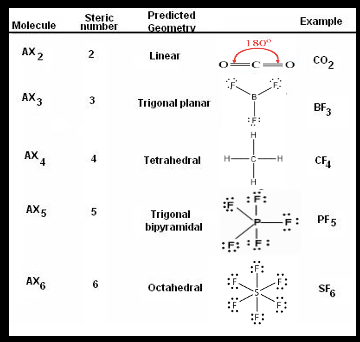
COMMON MOLECULAR GEOMETRIES
Polar or non-polar?

40
Key
1. Nonpolar
2. Nonpolar
3. Nonpolar
4. Nonpolar
5. Nonpolar
41
Key
6. Polar
7. Polar
8. Polar

42
43
Multiple Choice

1. N2
44
Multiple Choice

2. SO2
45
Multiple Choice

3. BrF3
46
Multiple Choice

4. HCN
47
Multiple Choice

5. CH2Cl2
48
Open Ended
49

50

51

52

53

54

55

56

57

58

59

60

Molecular Polarity
Synthesis Session
Show answer
Auto Play
Slide 1 / 60
SLIDE
Similar Resources on Wayground

56 questions
SU 201 Unit 1.3
Lesson
•
University
52 questions
Electron Configuration and Periodic Table
Lesson
•
11th - 12th Grade
58 questions
CHAPTER 6 LECTURE KML 2024_2025
Lesson
•
11th Grade
56 questions
APES Study Session 2/22
Lesson
•
12th Grade
57 questions
Solubility
Lesson
•
12th Grade
51 questions
Natural Disaster
Lesson
•
11th Grade
59 questions
Week 7 Review AP Chemistry K-CHEMISTRY
Lesson
•
12th Grade
59 questions
Gaseous Exchange
Lesson
•
12th Grade
Popular Resources on Wayground
15 questions
Fractions on a Number Line

Quiz
•
3rd Grade
10 questions
Probability Practice
Quiz
•
4th Grade
15 questions
Probability on Number LIne
Quiz
•
4th Grade
20 questions
Equivalent Fractions
Quiz
•
3rd Grade
25 questions
Multiplication Facts
Quiz
•
5th Grade
22 questions
fractions
Quiz
•
3rd Grade
6 questions
Appropriate Chromebook Usage
Lesson
•
7th Grade
10 questions
Greek Bases tele and phon
Quiz
•
6th - 8th Grade
Discover more resources for Science
14 questions
Natural Selection and Adaptation
Lesson
•
9th - 12th Grade
30 questions
Unit 2C Progress Check (Biosphere 3)
Quiz
•
9th - 12th Grade
15 questions
Punnett Square & Pedigree Charts- Review
Quiz
•
9th - 12th Grade
28 questions
Asexual vs. Sexual Reproduction
Quiz
•
9th - 12th Grade
25 questions
Heredity and Punnett Squares
Quiz
•
9th - 12th Grade
17 questions
Explore Plate Boundaries and Tectonic Processes
Quiz
•
9th - 12th Grade
12 questions
Identify Functions of Cell Organelles
Quiz
•
9th - 12th Grade
19 questions
Electricity and Magnetism
Lesson
•
9th - 12th Grade