
Unit 3

Flashcard
•
Chemistry
•
11th Grade
•
Practice Problem
•
Hard

Rebecca Fanning
FREE Resource
Student preview

43 questions
Show all answers
1.
FLASHCARD QUESTION
Front
Which electromagnetic waves have the highest frequencies and the shortest wavelengths?
Back
gamma rays
Answer explanation
Gamma rays have the highest frequencies and the shortest wavelengths in the electromagnetic spectrum, surpassing microwaves and visible light, making them the correct answer.
2.
FLASHCARD QUESTION
Front
Which electromagnetic waves are used in ovens and cell phone communications?
Back
microwaves
Answer explanation
Microwaves are the electromagnetic waves used in ovens to heat food and in cell phone communications for transmitting signals. They are effective at penetrating materials, making them ideal for these applications.
3.
FLASHCARD QUESTION
Front
How much of the electromagnetic spectrum is made up of visible light?
Back
only a small portion
Answer explanation
Visible light constitutes only a small portion of the electromagnetic spectrum, which includes a wide range of wavelengths from radio waves to gamma rays. Thus, the correct answer is 'only a small portion'.
4.
FLASHCARD QUESTION
Front
List the electromagnetic waves in order of decreasing frequency: X-rays, microwaves, infrared rays; UV rays, visible light, x-rays; infrared rays, microwaves, radio waves.
Back
infrared rays, microwaves, radio waves
Answer explanation
Electromagnetic waves are ordered by frequency from highest to lowest as follows: X-rays, UV rays, visible light, infrared rays, microwaves, and radio waves. Thus, the correct order is infrared rays, microwaves, radio waves.
5.
FLASHCARD QUESTION
Front
Valence electron
Back
Electrons in the outer shell
Answer explanation
Valence electrons are the electrons located in the outermost shell of an atom. They play a crucial role in chemical bonding and reactions, making the correct choice "Electrons in the outer shell".
6.
FLASHCARD QUESTION
Front
The innermost energy level has a maximum of how many electrons?
Back
2
Answer explanation
The innermost energy level, also known as the first shell, can hold a maximum of 2 electrons. This is due to the formula 2n², where n is the energy level number. For n=1, 2(1)² = 2.
7.
FLASHCARD QUESTION
Front
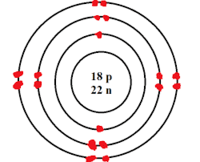
What does the Bohr Model represent?
Back
The structure of an atom
Answer explanation
The Bohr Model represents the structure of an atom, specifically how electrons orbit the nucleus in defined energy levels, similar to planets orbiting the sun in the Solar System.


Access all questions and much more by creating a free account
Create resources
Host any resource
Get auto-graded reports

Continue with Google

Continue with Email

Continue with Classlink

Continue with Clever
or continue with

Microsoft
%20(1).png)
Apple

Others
Already have an account?
Similar Resources on Wayground

40 questions
Close-up B1+ Unit 8 Quiz
Flashcard
•
10th Grade
42 questions
Flashcard sur le management
Flashcard
•
10th Grade
33 questions
Vocabulary Unit 1- E12
Flashcard
•
12th Grade
30 questions
Vocabulary Flashcards
Flashcard
•
KG
25 questions
Testing for Anions and Cations
Flashcard
•
11th Grade
37 questions
Physics Flashcard
Flashcard
•
9th Grade
42 questions
APUSH Mid-Term
Flashcard
•
11th Grade - University
34 questions
Unit 108 AGD Flashcards
Flashcard
•
11th Grade
Popular Resources on Wayground
15 questions
Fractions on a Number Line

Quiz
•
3rd Grade
20 questions
Equivalent Fractions
Quiz
•
3rd Grade
25 questions
Multiplication Facts
Quiz
•
5th Grade
54 questions
Analyzing Line Graphs & Tables
Quiz
•
4th Grade
22 questions
fractions
Quiz
•
3rd Grade
20 questions
Main Idea and Details
Quiz
•
5th Grade
20 questions
Context Clues
Quiz
•
6th Grade
15 questions
Equivalent Fractions
Quiz
•
4th Grade
Discover more resources for Chemistry
20 questions
Types of Chemical Reactions
Quiz
•
9th - 12th Grade
20 questions
electron configurations and orbital notation
Quiz
•
9th - 12th Grade
5 questions
Mole Conversions Made Easy

Interactive video
•
11th Grade
10 questions
16. Limiting Reagent/% Yield Practice
Quiz
•
11th Grade
20 questions
Metric Conversions
Quiz
•
11th Grade
10 questions
PERIODIC TRENDS
Quiz
•
11th Grade
14 questions
Reaction Types, Balancing, and Predicting Products
Quiz
•
9th - 12th Grade
8 questions
Empirical and Molecular Formulas

Lesson
•
9th - 12th Grade